
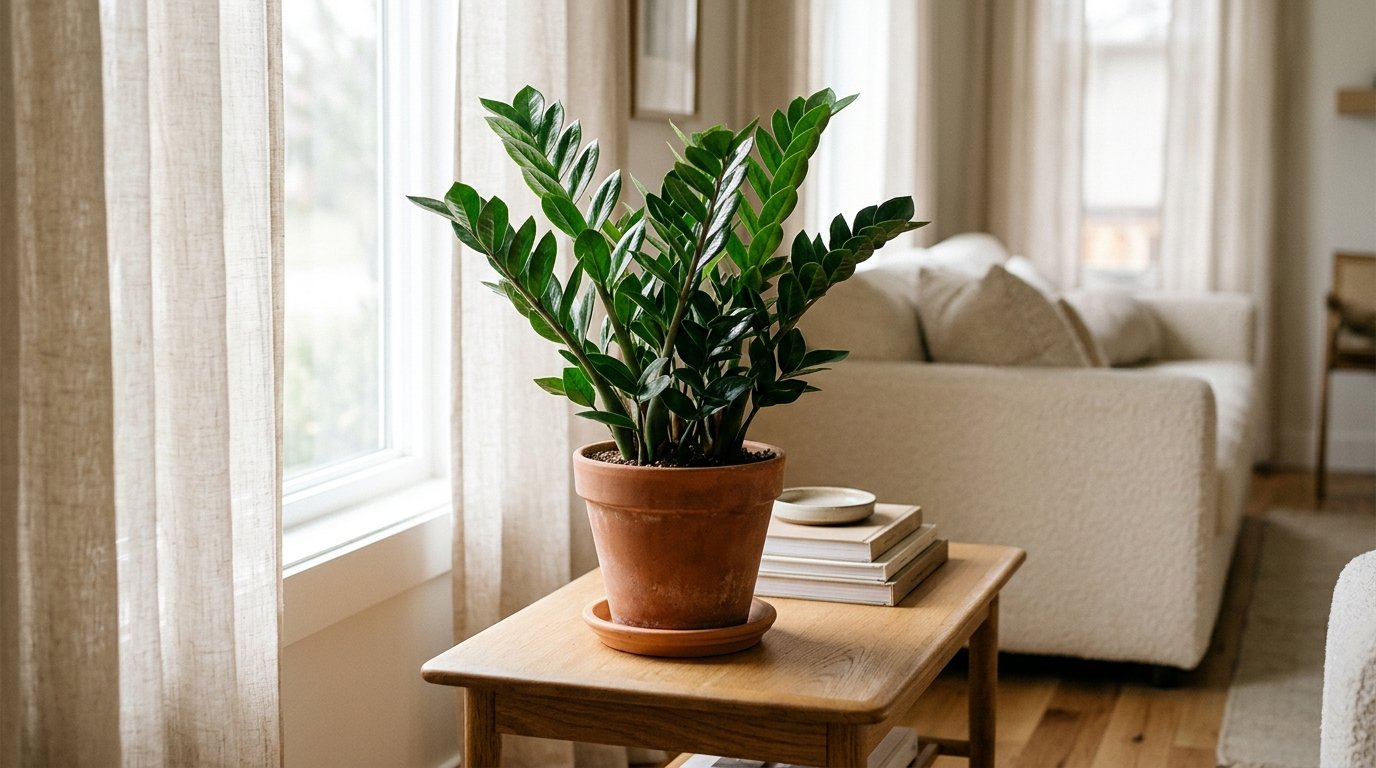
How to Take Care of a ZZ Plant: A Simple Beginner Guide
A ZZ plant is one of the easiest indoor plants you can grow. Give it bright, indirect light, water it only when the soil is fully dry, and put it in a pot with drainage holes. That is most of ZZ plant care. It tolerates low light, dry air, and missed waterings better than almost any other houseplant.
The ZZ plant, also called the Zanzibar gem or eternity plant, stores water in thick underground rhizomes. Those rhizomes work like a built-in water tank. They let the plant go for weeks without a drink. At the same time, they make overwatering the main danger. A ZZ plant in soggy soil will rot from the roots up. This guide shows you how to take care of a ZZ plant indoors, step by step.
How to Take Care of a ZZ Plant
The short answer is simple. Put your ZZ plant in bright, indirect light. Water it only when the soil is dry all the way through, usually every 2 to 3 weeks in summer and about once a month in winter. Use a fast-draining potting mix in a pot with drainage holes. Keep it between 65 and 80 degrees Fahrenheit, away from cold drafts. Feed it lightly in spring and summer.
That is the whole routine. A ZZ plant forgives a lot. It will survive a missed watering, a dim corner, and a week away from home. The one thing it will not forgive is sitting in wet soil. Overwatering causes root rot, and root rot is the main way people kill a ZZ plant. If you are unsure whether to water, wait another week.
ZZ plant quick care card
Light: bright, indirect light is best. It tolerates low light, but growth slows there.
Water: only when the soil is fully dry. Usually every 2 to 3 weeks in summer, about once a month in winter.
Soil: fast-draining mix, such as cactus and succulent mix, or indoor potting mix with perlite.
Temperature: 65 to 80 degrees Fahrenheit. Keep it above 50 degrees Fahrenheit.
Humidity: normal home air is fine. It likes 40 to 60 percent humidity, but it adapts to drier air.
Feeding: balanced liquid fertilizer at half strength, once a month in spring and summer. None in winter.
Pets: toxic to cats and dogs if eaten, according to the ASPCA. Keep it out of their reach.
What Is a ZZ Plant?
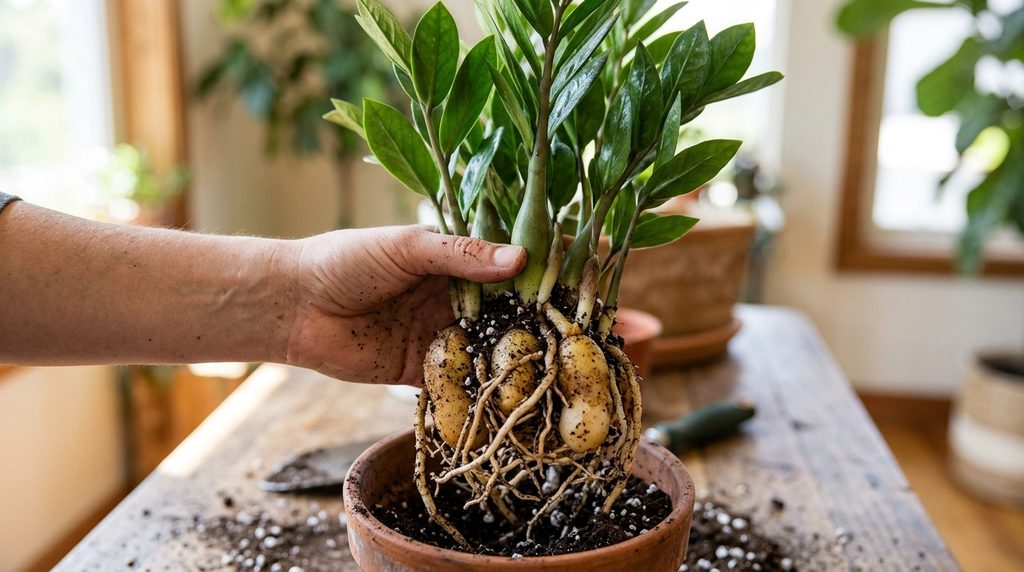
The ZZ plant is Zamioculcas zamiifolia, a tropical plant from Eastern Africa. It grows from thick underground rhizomes that look like small potatoes. From those rhizomes, upright stems rise, each lined with pairs of glossy, dark green leaflets. A healthy plant indoors usually grows 2 to 3 feet tall.
You will also see the ZZ plant sold as the Zanzibar gem, the eternity plant, or the aroid palm. The most common type is plain green. There are also darker types, such as Raven, with leaves that start bright green and turn almost black as they age. The care is the same for every type. For a full plant profile, see the North Carolina State University Extension guide to ZZ plant. The ZZ plant became popular for a simple reason. It looks good with very little work, and it does not need misting or daily attention. Our 15 Best Tall Indoor Plants for Every Room guide lists other tall, easy plants if you want a second one.
Light: What a ZZ Plant Needs
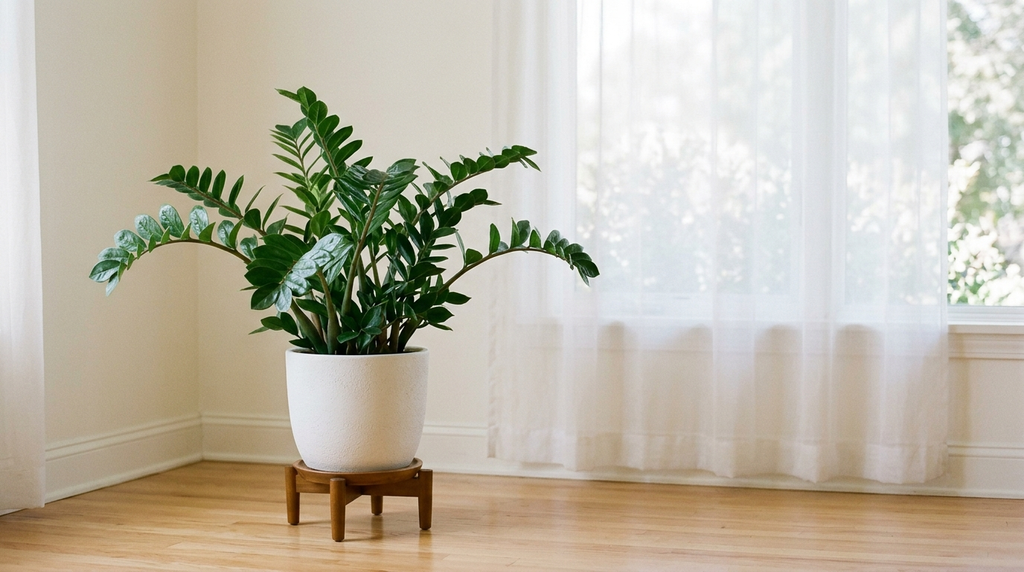
A ZZ plant grows best in bright, indirect light. That means a bright spot near a window, where the sun does not hit the leaves for long. An east-facing window is ideal. A spot a few feet back from a south or west window works well too. In bright, indirect light, a ZZ plant grows fuller and puts out new stems more often.
A ZZ plant can survive in low light. It will grow in a north-facing window, in a hallway, or on a desk across the room from a window. It can even grow under fluorescent office lights. But low light means survive, not thrive. Growth slows to a crawl there, and new stems stay thin and stretched. If your plant has not grown in months, light is the first thing to check.
However, direct sun is the one light a ZZ plant does not like. Strong sun scorches the leaves. They turn pale, then brown and crispy at the edges. Move a sunburned plant a few feet back from the window, or behind a sheer curtain. Our How Much Light Do Indoor Plants Need? guide explains low, medium, and high light in plain words, and how to test the light in your room.
Where should you place a ZZ plant in your house?
The best spot is near an east-facing window, or a few feet back from a south or west window. A bright living room, a bedroom with a large window, or a home office all work well. Avoid two spots: right against a south-facing window in summer, and a windowless room with no light at all.
Water: The One Rule That Matters Most
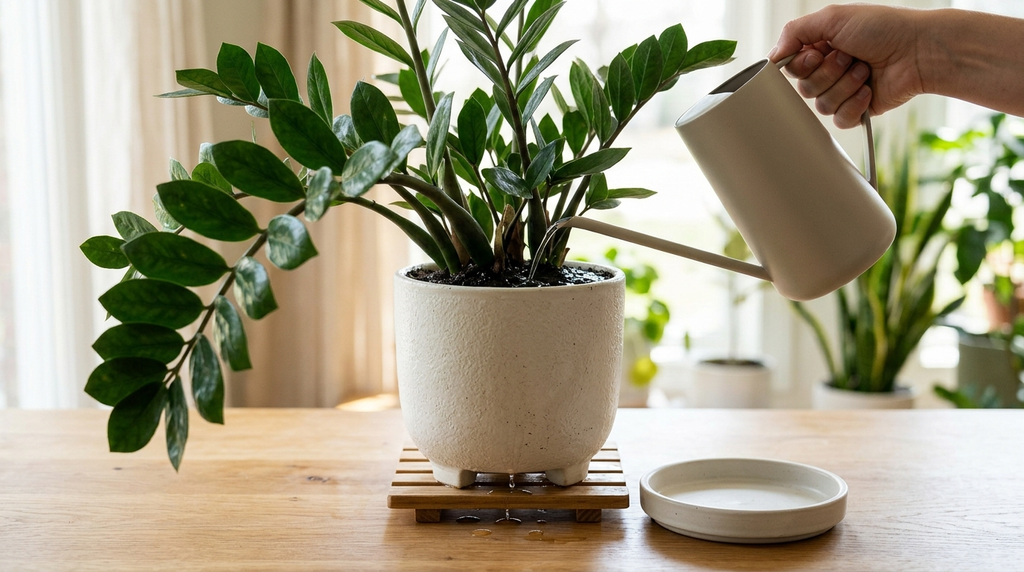
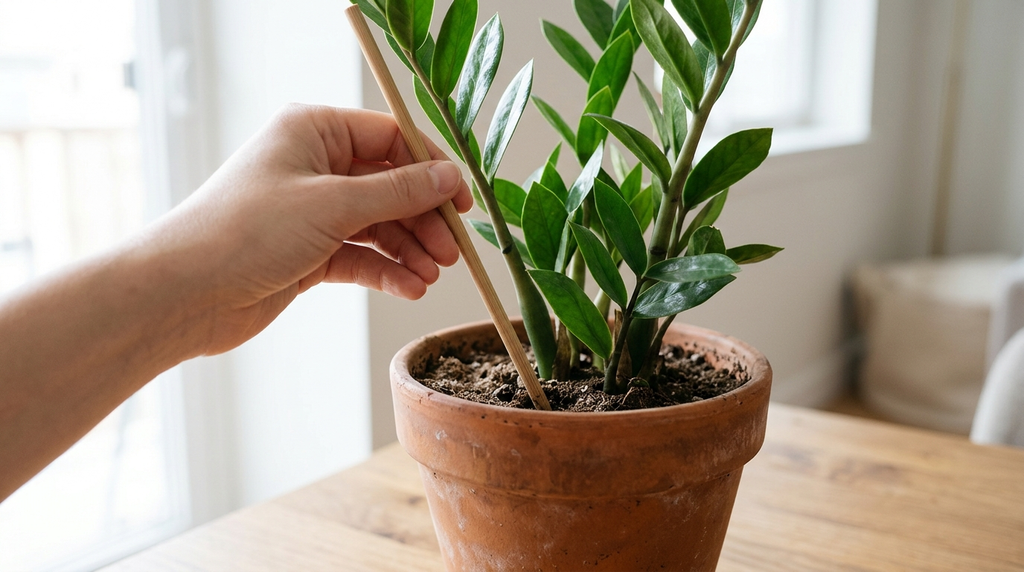
Water a ZZ plant only when the soil is dry all the way through. Push your finger deep into the soil, or use a wooden stick. If the soil feels cool or damp anywhere, wait. When it is dry through the pot, water it well. Pour water slowly until it runs out of the drainage holes. Then empty the saucer, so the pot does not sit in water.
Do not water on a fixed schedule. The calendar is the wrong tool. Your finger is the right one. A plant in bright light uses water faster than the same plant in a dim room, and a small pot dries out faster than a big one. Check the soil first, every time. Our How to Water Indoor Plants guide explains how to check the soil and how to water deeply without overwatering.
Overwatering is the most common ZZ plant mistake. If the soil stays wet for days, the rhizomes cannot breathe. They turn brown and mushy. That is root rot. The leaves turn yellow, the stems go soft, and the plant can collapse. If you see that, stop watering at once and let the soil dry out fully. Healthy rhizomes are firm and pale. Rotting ones are soft and brown, and they smell bad.
How often should I water a ZZ plant?
As a starting point, water every 2 to 3 weeks in spring and summer, and about once a month in winter. In low light, you may water even less often. Always check the soil first. If it is still damp, wait another week. A thirsty ZZ plant bounces back fast. A rotted one usually does not.
Soil, Pot, and Repotting
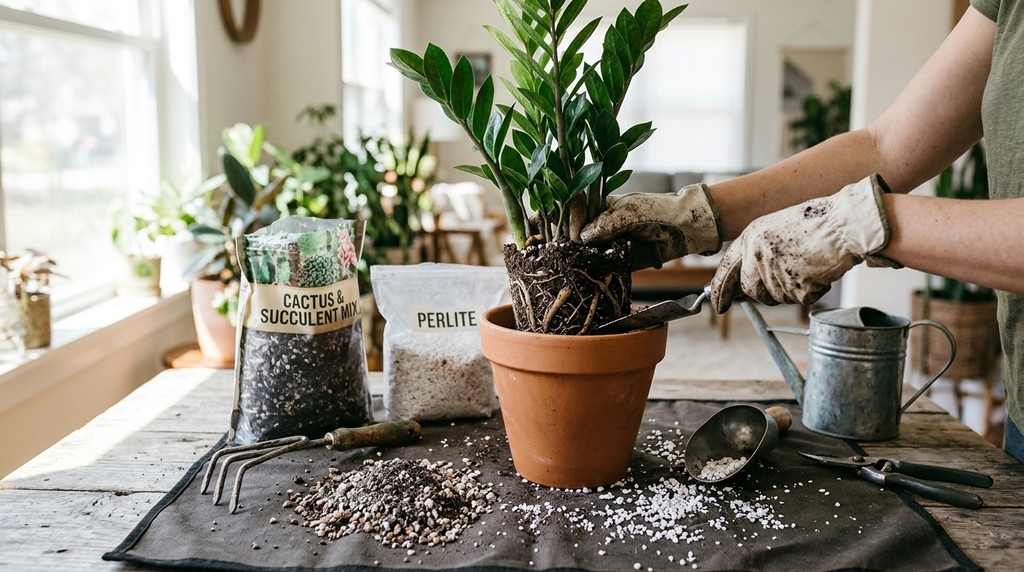
A ZZ plant needs soil that drains fast. Plain potting mix holds too much water for it. Use a cactus and succulent mix, or mix regular indoor potting soil with perlite, about one part perlite to two parts soil. The pot matters more than the soil brand. It must have drainage holes. Without them, water collects at the bottom, and the rhizomes rot. A terracotta pot is a good choice, since it is porous and helps the soil dry out faster.
A ZZ plant likes a snug pot. Do not put a small plant in a huge pot. The extra soil stays wet, and the roots cannot use it. Go up only one pot size at a time, about 1 to 2 inches wider than the root ball. Repot every 2 to 3 years, in spring, or when you see roots coming out of the drainage holes.
Temperature and Humidity
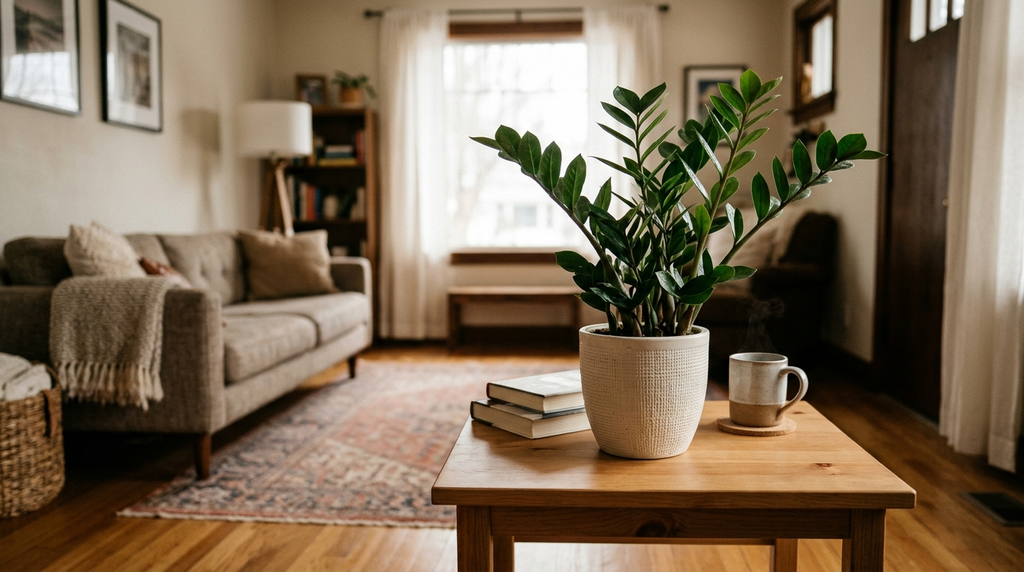
A ZZ plant likes normal home temperatures. Between 65 and 80 degrees Fahrenheit is ideal. It can cope with warmer rooms in summer. What it does not like is cold. Keep it above 50 degrees Fahrenheit. Below that, the leaves and stems can be damaged. Keep it away from cold windows in winter, drafty doors, and direct blasts from air conditioning vents.
Humidity is the easy part. A ZZ plant does not need misting, and it does not need a humidifier. Normal home air is fine. It likes 40 to 60 percent humidity, but it adapts to drier air. That is one more reason it does well in offices and bedrooms.
Feeding: Less Is More
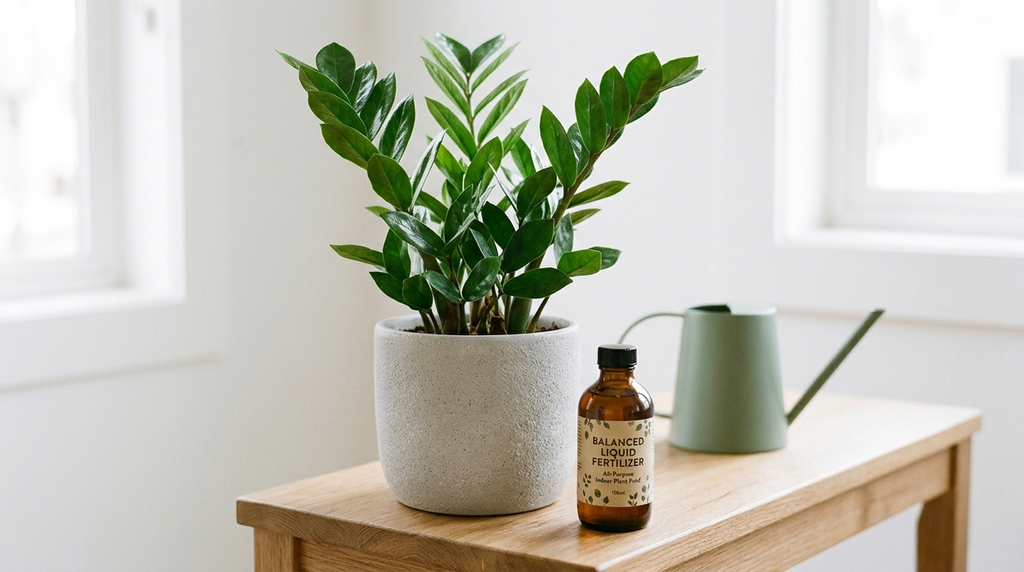
A ZZ plant is a light feeder. It does not need much fertilizer, and too much will hurt it. Feed it only in spring and summer, when it is growing. Use a balanced liquid fertilizer at half the strength on the label, once a month. That is enough. Do not feed it in fall or winter, when growth slows. In addition, do not feed it on dry soil. Water the plant first, then feed it.
Overfeeding shows up as brown, crispy leaf tips and white salt crust on the soil. If you see that, stop feeding and flush the soil with plain water. Then skip fertilizer for a few months. A ZZ plant in low light needs even less food. If your plant sits in a dim room and grows slowly, you can skip fertilizer for a whole year.
Are coffee grounds, cinnamon, or Epsom salt good for a ZZ plant?
No. There is no solid evidence that coffee grounds, cinnamon, or Epsom salt help a ZZ plant. Coffee grounds can make the soil hold too much water and grow mold. Epsom salt adds magnesium the plant probably does not need, and it can build up in the soil. Stick to a simple balanced fertilizer at half strength, in spring and summer.
How to Make a ZZ Plant Happy
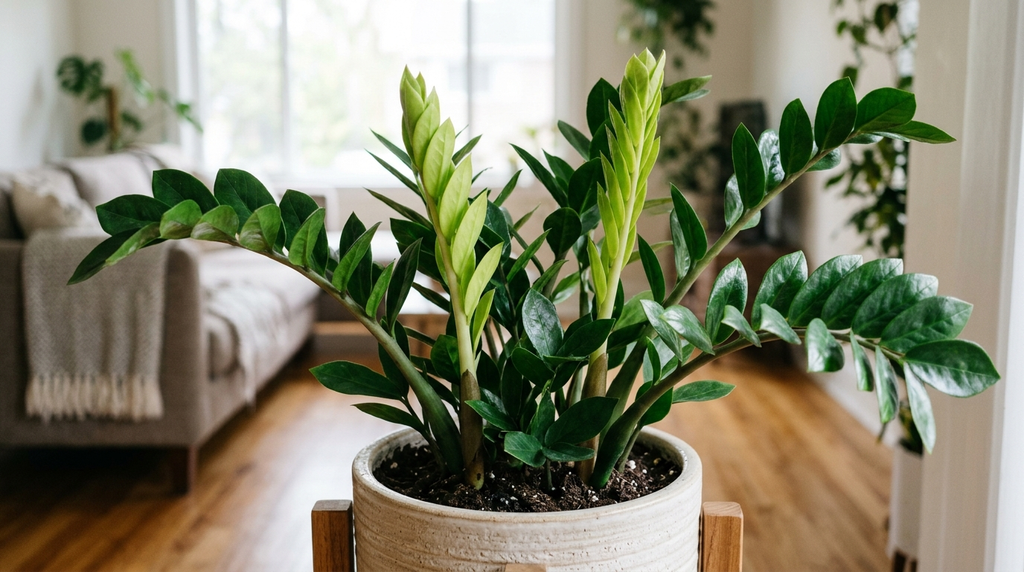
A happy ZZ plant is easy to spot. Its leaves are glossy, dark green, and firm. Its stems stand upright. In spring and summer, it puts out new stems that unroll like green spears. That new growth is the best sign of all. It means the light, water, and soil are right.
To keep it happy, do less, not more. Give it bright, indirect light. Water it only when the soil is fully dry. Leave it alone the rest of the time. Finally, rotate the pot a quarter turn every few weeks, so all sides get light and the plant grows evenly. Wipe the leaves with a damp cloth now and then, so dust does not block the light.
A ZZ plant is a slow grower, even when it is happy. Do not expect new leaves every week. In good light, you may see a few new stems each growing season. In low light, you may see only one or two a year. That is normal.
Common Problems and Quick Fixes
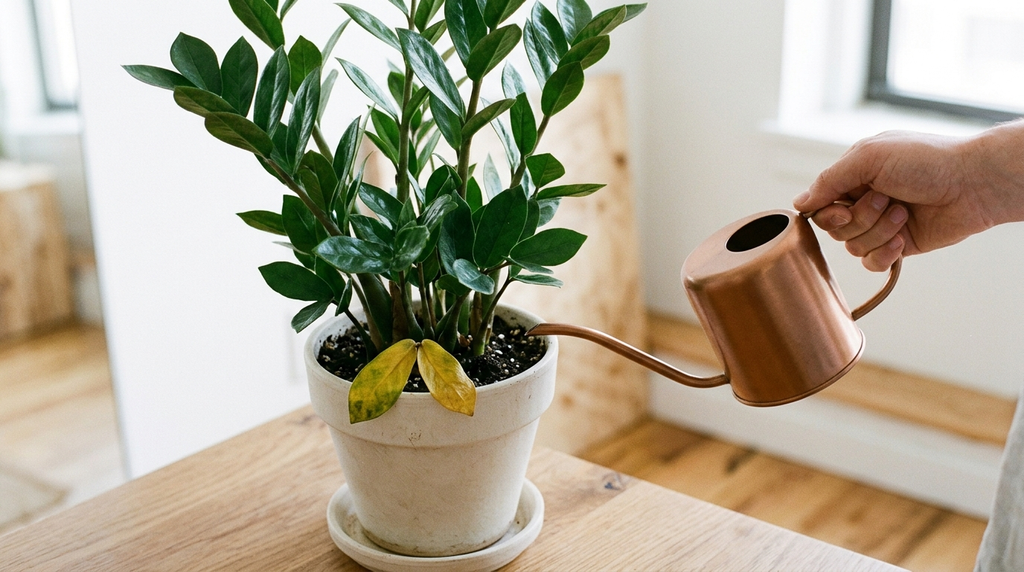
Most ZZ plant problems come from water or light. Check the soil first, before you change anything else. The soil tells you more than the leaves do.
Yellow leaves
Yellow leaves are the most common ZZ plant problem. They are almost always caused by overwatering. The soil stays wet, the rhizomes start to rot, and the lower leaves turn yellow first. Stop watering at once and let the soil dry out fully. If the pot has no drainage holes, repot the plant into one that does. A few old leaves turning yellow on their own is normal. A whole plant turning yellow is not.
Drooping stems
Drooping stems can mean two opposite things. If the soil is dry and the stems look wrinkled, the plant is thirsty. Water it well, and the stems should lift again. If the soil is wet and the stems still droop, the roots may be rotting. Let the soil dry out. If the stems feel soft at the base, take the plant out of the pot, cut away any soft, brown rhizomes, and repot in fresh, fast-draining mix.
No growth
A ZZ plant that does not grow is usually short of light. Move it closer to a bright window, and be patient. It can take weeks to show new growth. If the plant has been in the same pot for years, it may also be rootbound. Check the drainage holes for roots. If you see them, repot one size up in spring.
How to Propagate a ZZ Plant
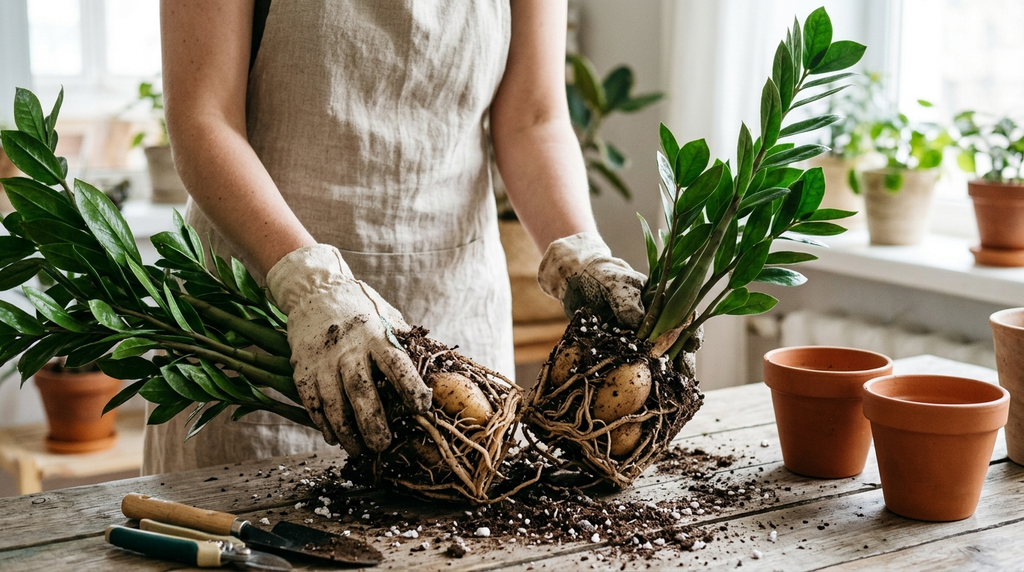
You can make a new ZZ plant from your old one in three ways. Division is the fastest. Leaf cuttings and stem cuttings also work, but they are slow. Whichever way you choose, do it in spring, when the plant is growing.
Division
Division is the best way for a beginner. Take the plant out of its pot. You will see the rhizomes, like small potatoes, joined together. Gently pull or cut the clump into two or three parts, with at least one stem and one rhizome in each part. Plant each part in its own pot, in fast-draining mix. Water lightly, and keep the new plants in bright, indirect light.
Leaf and stem cuttings
You can also grow a new plant from a single leaflet or a stem cutting. Push the cut end into moist, fast-draining mix, and keep it warm and bright. A rhizome will form under the soil first, and a new stem will follow. Be patient. Leaf cuttings can take 6 to 12 months to make a new stem. Stem cuttings are a little faster, but still slow.
A note on patented varieties
Most ZZ plants are fine to propagate at home. However, a few named varieties are protected by plant patents. You should not propagate those to sell. If you bought a named variety, check the plant tag. It will say if the plant is patented. When in doubt, enjoy the plant as it is, and buy a second one instead.
Is a ZZ Plant Safe Around Pets and Children?
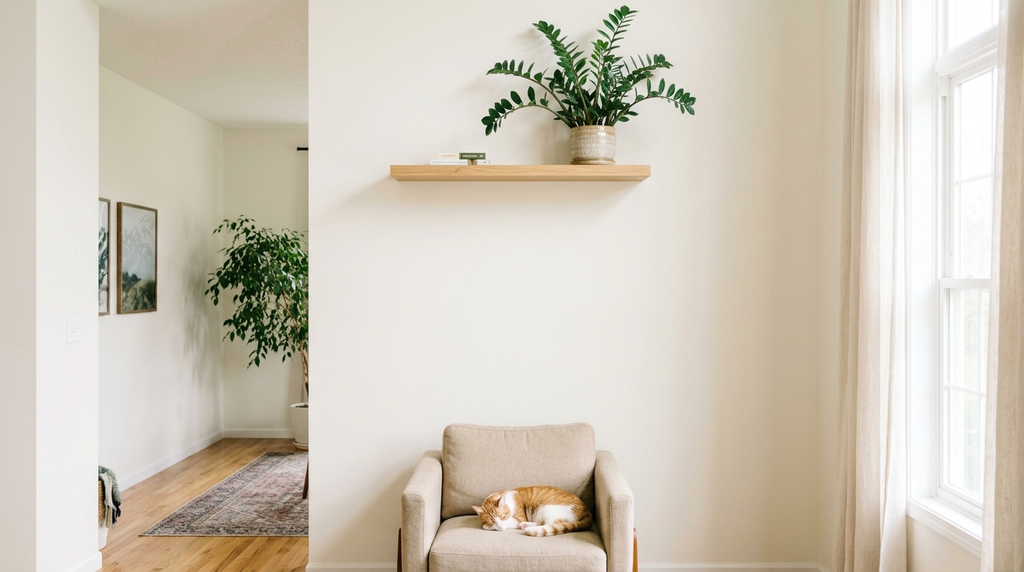
A ZZ plant is toxic if eaten. It contains calcium oxalate crystals, which irritate the mouth and stomach. Cats and dogs that chew the leaves may drool, paw at their mouth, or vomit. Children who chew a leaf may get a sore mouth too. The plant is not usually deadly, but it is not safe to eat.
Keep your ZZ plant out of reach of pets and small children. A high shelf, a plant stand, or a room pets do not enter all work well. If a pet or child eats part of the plant, call your vet or doctor for advice. Furthermore, wash your hands after handling the plant. The sap can irritate skin, especially if you have sensitive skin or a small cut.
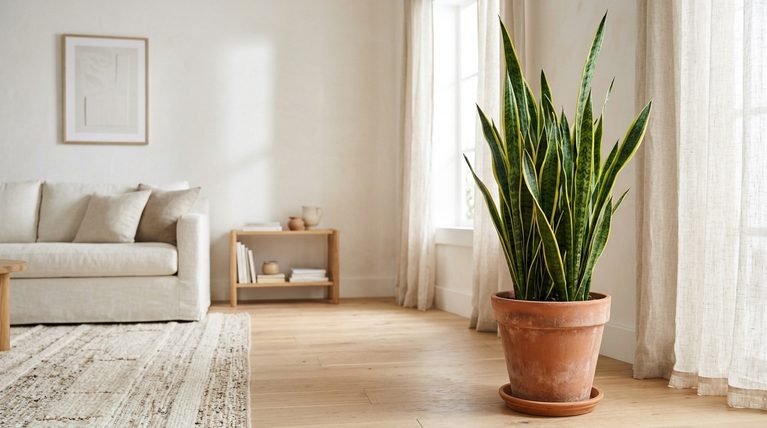
If you need a pet-safe plant instead, our How to Take Care of a Snake Plant Indoors guide is not the answer either, since snake plants are also toxic to pets. Look for a spider plant or a Boston fern, which are safer choices around cats and dogs.
Frequently Asked Questions
Is a ZZ plant difficult to care for?
No. A ZZ plant is one of the easiest indoor plants to care for. It tolerates low light, dry air, and missed waterings. The only common mistake is watering it too often. If you water only when the soil is fully dry, and give it bright, indirect light, it will do well with very little attention.
What is the lifespan of a ZZ plant?
A ZZ plant can live for many years indoors. With steady care, it can stay with you for a decade or more. The main thing that shortens its life is overwatering, which rots the rhizomes.
Is it okay to touch a ZZ plant?
Yes, it is okay to touch a ZZ plant. Simply touching the leaves is fine. However, the sap inside the plant can irritate skin, so wash your hands after pruning it or handling a cut stem. Keep the plant away from pets and children, since it is toxic if eaten.
What are the downsides of having a ZZ plant?
A ZZ plant has three main downsides. First, it is toxic to cats, dogs, and people if eaten. Second, it grows very slowly, so you will wait months for new stems. Third, it is easy to kill with too much water, since its rhizomes rot in wet soil.
Why is it illegal to propagate a ZZ plant?
It is not illegal to propagate an ordinary ZZ plant at home. The rule is about patented named varieties, which may not be propagated to sell. If you bought a plain green ZZ plant, you can divide it or take cuttings at home without a problem.
What does it symbolize when a ZZ plant blooms?
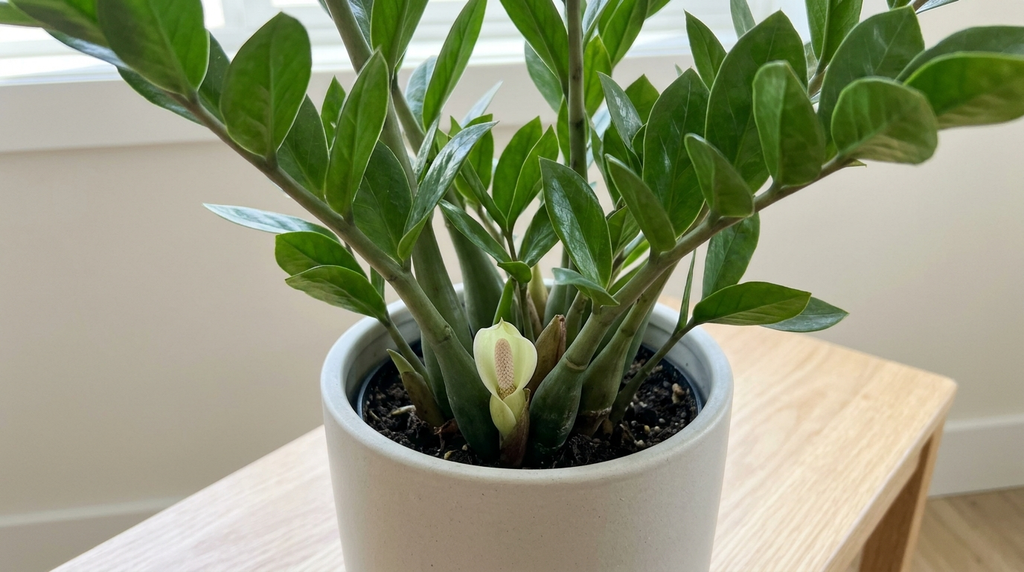
A ZZ plant rarely blooms indoors. When it does, it makes a small, pale flower close to the base of the plant. In some traditions, a bloom is seen as a sign of good fortune and steady growth. That is folklore, not a care signal. Most ZZ plants never bloom indoors, and they are still healthy.
Conclusion
A ZZ plant is a good choice if you want a plant that asks for little and gives a lot. Give it bright, indirect light. Water it only when the soil is fully dry. Use a fast-draining mix in a pot with drainage holes. Feed it lightly in spring and summer. That is all it needs.
Therefore, your next step is simple. Check the soil of your ZZ plant today. Push your finger deep into the pot. If it feels damp, wait. If it is dry all the way through, water it well, and let the pot drain. That one habit will keep your plant alive for years.
Next, explore How to Water Indoor Plants, How Much Light Do Indoor Plants Need?, How to Take Care of a Snake Plant Indoors, and How to Take Care of a Pothos Plant.

One Comment