15 Best Tall Indoor Plants for Every Room (Easy to Grow)
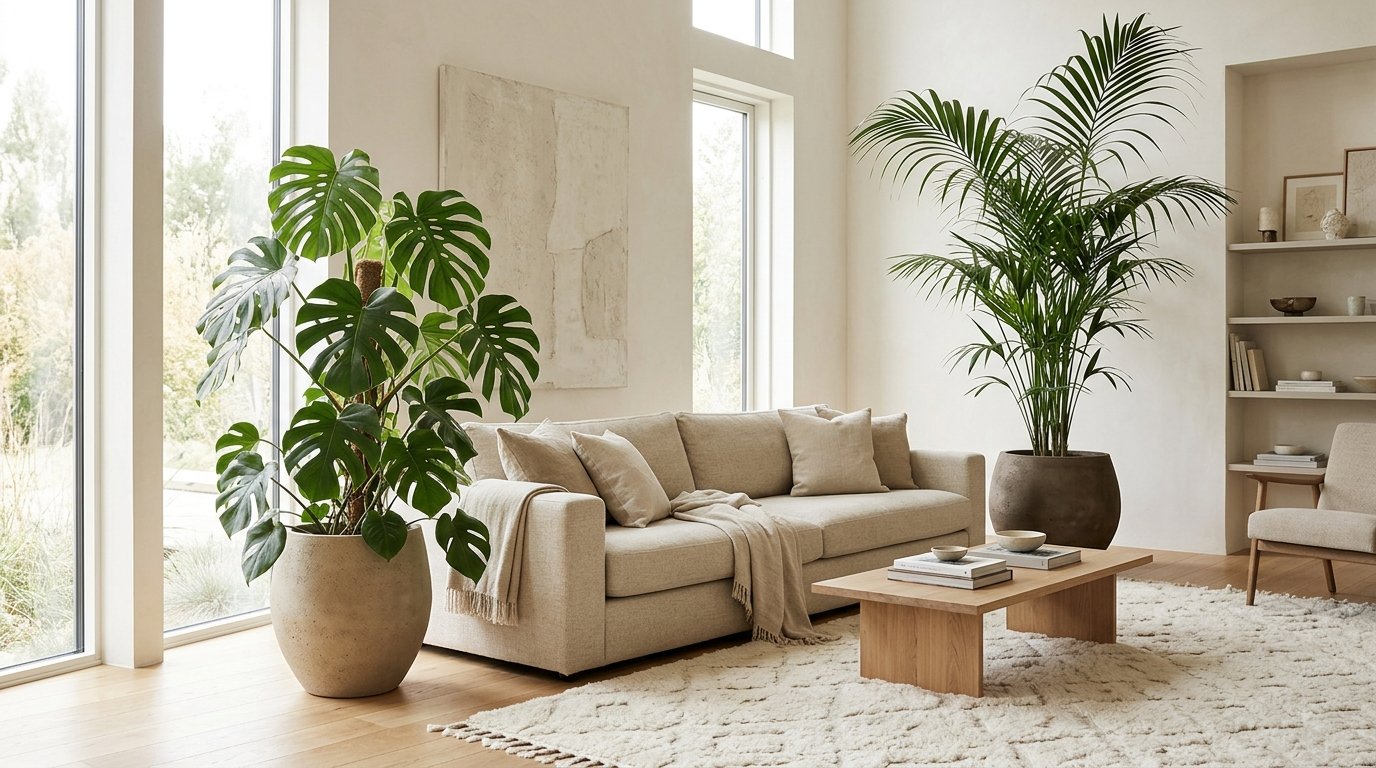
A tall indoor plant does what a small one cannot: it fills an empty corner, balances a high ceiling, and makes a room feel finished without any furniture. It also asks more of you than a small plant does. It needs the right amount of light at that height, a pot you can actually move, and enough headroom to keep growing.
This guide is about height, not overall size. A large plant can be wide and heavy; a tall plant is about going up. If you need presence and spread, see our Large Indoor Plants guide. If you need height for a corner, an entryway, or a room with high ceilings, start here.
Quick answer
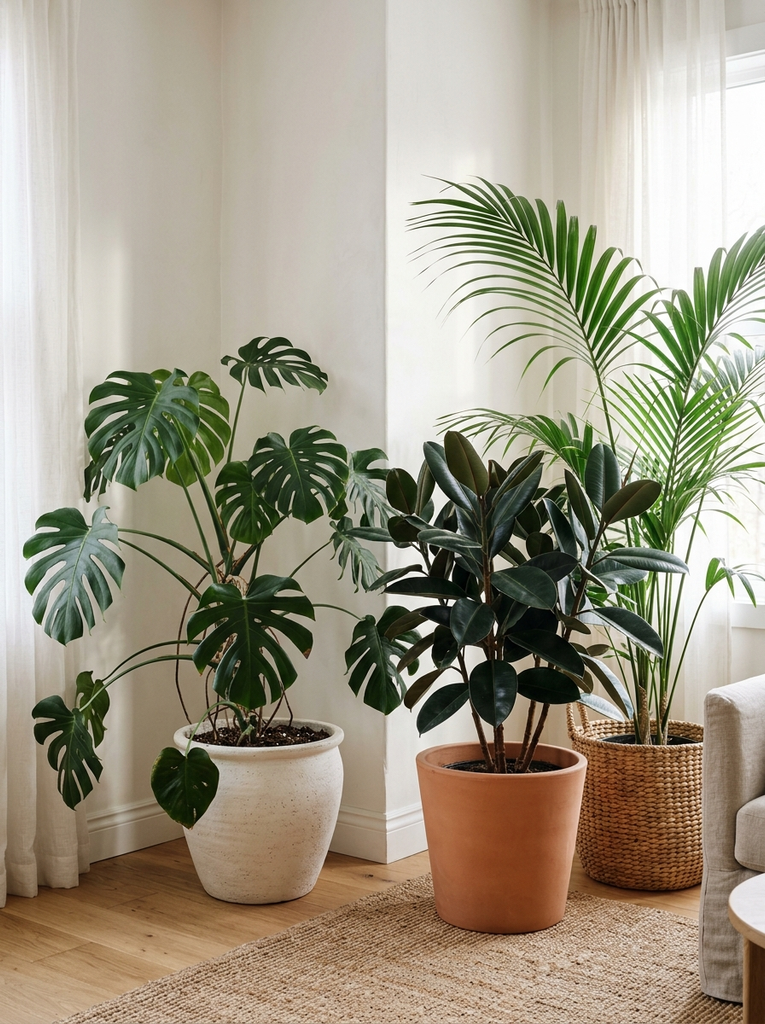
The best tall indoor plants are fiddle leaf fig, monstera, snake plant, bird of paradise, and Kentia palm. They grow 5-8 feet tall indoors, suit living rooms and empty corners, and most need bright, indirect light and watering only when the top soil is dry.
- Best overall: Fiddle Leaf Fig – the classic statement plant
- Best for beginners: Snake Plant – the hardest to kill on this list
- Best for low light: ZZ Plant (tall varieties) and Snake Plant
- Best for pets: Money Tree and Areca Palm – the safest tall picks here (always double-check a specific plant against a current ASPCA list before bringing it home if you have pets)
How to choose a tall indoor plant
Measure before you buy. Check the ceiling height, the floor space, and the light at the exact spot – not the light in the middle of the room.
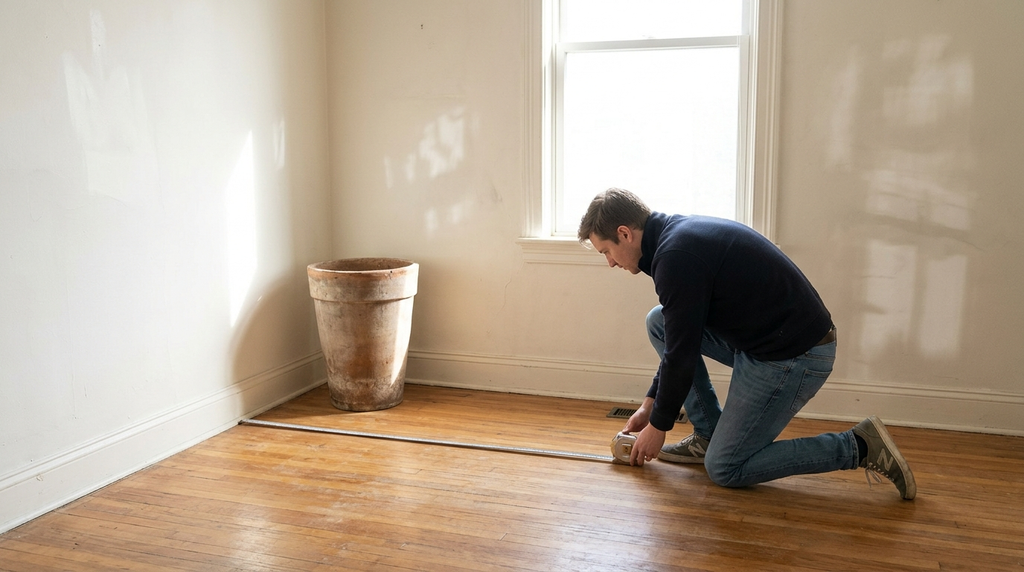
- Height: Check the height of the plant including its pot, then add the growth you expect in a year. A fiddle leaf fig or bird of paradise can add a foot or more a year in good light. Leave headroom under the ceiling, and keep the top leaves out of direct contact with a hot ceiling light.
- Footprint: Tall does not always mean wide. A snake plant or dracaena fits a narrow corner; a bird of paradise or areca palm needs 2-3 feet of spread. Measure the floor space, then buy a plant that fits it with room to grow.
- Light: Most tall plants need bright, indirect light. Put the plant near your brightest window, a few feet back from the glass. A tall plant in a dark corner will stretch toward the window, drop lower leaves, and grow thin and leggy.
- Pets: Several tall favorites – monstera, snake plant, ZZ plant, fiddle leaf fig, and dracaena – are toxic to cats and dogs if eaten. If you have pets, start with the pet-safe picks in the table below.
- Weight and stability: A tall plant is top-heavy. Use a heavier ceramic or stone pot, or add weight at the base, if the plant leans. Put the pot on a rolling plant caddy before you fill it with soil – moving a tall, watered plant is how floors get scratched and pots get dropped. See our Indoor Plant Stands guide for low, wide stands that suit heavy pots.
The 15 best tall indoor plants
1. Fiddle Leaf Fig (Ficus lyrata)
Height indoors: 6-10 feet. Light: brightest indirect spot you have. Water: when the top 2 inches feel dry; hates being moved and overwatered. Difficulty: moderate. Best room: living room, as a single statement plant. Pet note: toxic to cats and dogs if eaten. The classic tall plant – large glossy leaves, sculptural shape, and the most dramatic height on this list. Buy it for the spot it will live in, and leave it there.
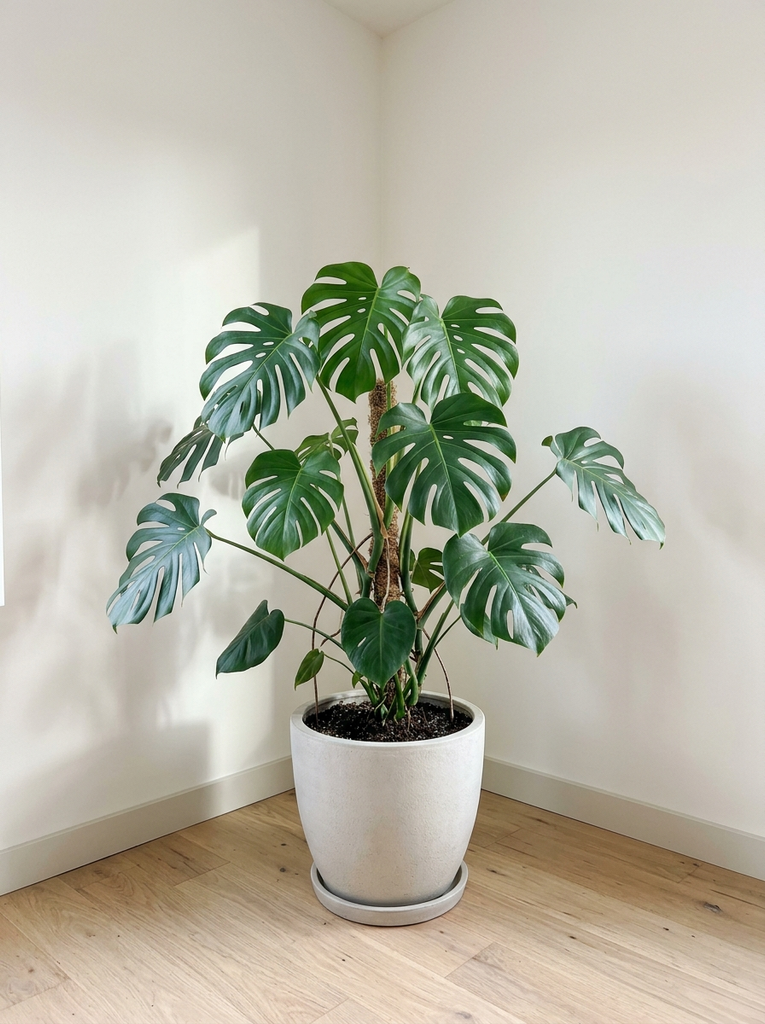
2. Monstera Deliciosa
Height indoors: 6-8 feet. Light: bright, indirect. Water: when the top 1-2 inches of soil feel dry. Difficulty: easy. Best room: living room or bright corner. Pet note: toxic to cats and dogs if eaten. Big, split leaves and fast growth in good light. Give it a moss pole or trellis to climb, and it will grow taller and straighter instead of sprawling.
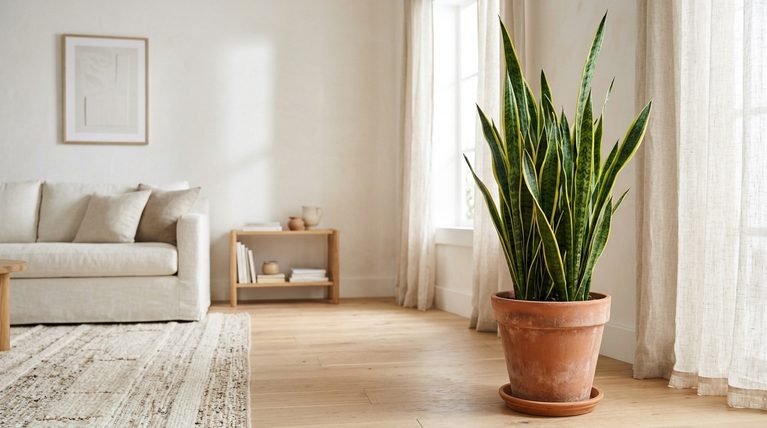
3. Snake Plant (Sansevieria / Dracaena trifasciata)
Height indoors: 3-6 feet. Light: bright to low; tolerates low light better than most tall plants. Water: every 2-3 weeks, only when the soil is fully dry. Difficulty: very easy. Best room: bedroom, entryway, or any narrow corner. Pet note: toxic to cats and dogs if eaten. The easiest tall plant to keep alive. It grows straight up, needs almost no attention, and survives the low light that kills most tall plants.
4. Bird of Paradise (Strelitzia nicolai)
Height indoors: 6-8 feet. Light: bright light, some direct sun. Water: keep soil lightly moist in spring and summer; less in winter. Difficulty: moderate. Best room: living room with a large bright window. Pet note: toxic to cats and dogs if eaten. Huge banana-like leaves give the most tropical look on this list. It needs the brightest spot you have – without enough light, it grows slowly and the leaves stay small.
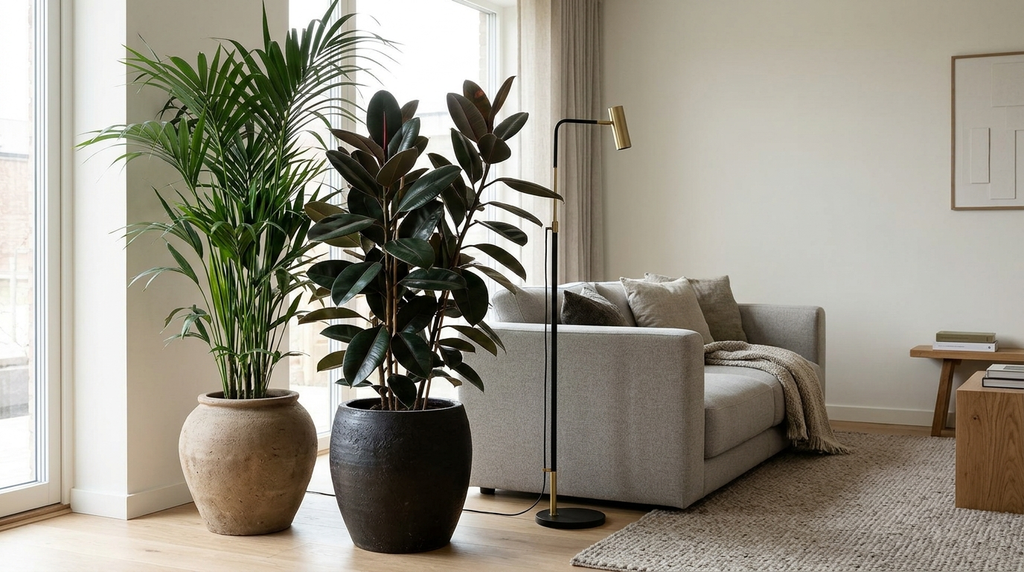
5. Kentia Palm (Howea forsteriana)
Height indoors: 6-10 feet, slowly. Light: bright, indirect; tolerates medium light. Water: when the top inch feels dry; likes humidity. Difficulty: easy to moderate. Best room: living room corner or entryway. Pet note: generally considered pet-safe. Feathery fronds that fill a corner without a solid wall of leaves. Slow-growing, so buy the height you want rather than waiting for it.
6. Areca Palm (Dypsis lutescens)
Height indoors: 6-8 feet. Light: bright, indirect. Water: when the top inch feels dry; likes humidity. Difficulty: easy to moderate. Best room: living room or bedroom corner. Pet note: generally considered pet-safe. A softer, fuller palm than Kentia, with many thin stems. It likes regular watering in summer and a wipe of its fronds to keep dust off.
7. Rubber Plant (Ficus elastica)
Height indoors: 6-10 feet. Light: bright, indirect; tolerates some direct morning sun. Water: when the top 1-2 inches feel dry. Difficulty: easy. Best room: living room or office corner. Pet note: toxic to cats and dogs if eaten. Thick, glossy leaves and a straight, upright stem. Prune the top in spring if you want it to branch instead of growing into a single tall pole.
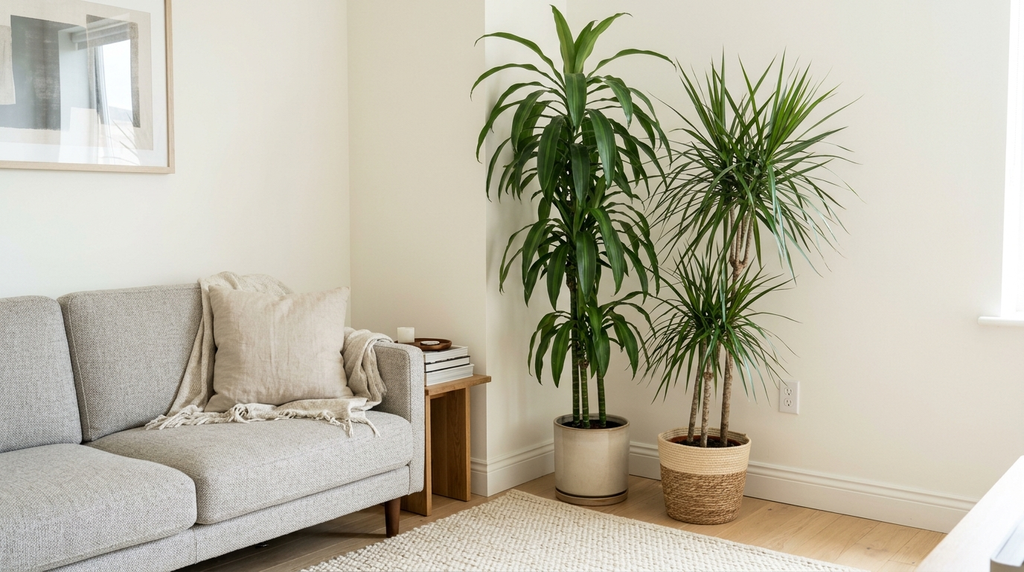
8. Dracaena (Dracaena fragrans / Dracaena marginata)
Height indoors: 5-8 feet. Light: bright to medium, indirect. Water: when the top 2 inches feel dry; sensitive to fluoride in tap water. Difficulty: easy. Best room: narrow corner, hallway, or office. Pet note: toxic to cats and dogs if eaten. Upright and architectural, and many types stay narrow even as they grow tall – one of the best tall plants for a tight space. If leaf tips turn brown, try filtered or distilled water.
9. Yucca (Yucca gigantea)
Height indoors: 5-8 feet. Light: bright light, some direct sun. Water: when the soil is mostly dry; hates sitting wet. Difficulty: easy. Best room: bright living room or sunroom. Pet note: toxic to cats and dogs if eaten. A stiff, spiky silhouette that suits modern rooms. It would rather be too dry than too wet, so water sparingly and always let the pot drain fully.
10. Corn Plant (Dracaena fragrans ‘Massangeana’)
Height indoors: 5-6 feet. Light: bright to medium, indirect. Water: when the top 2 inches feel dry. Difficulty: easy. Best room: living room or office. Pet note: toxic to cats and dogs if eaten. A thick woody cane with a crown of arching green leaves, often sold with two or three canes of different heights for a layered look. Forgiving of a missed watering and of medium light.
11. Money Tree (Pachira aquatica)
Height indoors: 5-6 feet. Light: bright, indirect. Water: when the top 2 inches feel dry; likes humidity. Difficulty: easy. Best room: living room, bedroom, or home office. Pet note: generally considered pet-safe. The braided trunk makes it look taller than it is, and it is one of the few tall, pet-safe plants. It dislikes drafts and sudden moves, so pick its spot and leave it there.
12. Olive Tree (Olea europaea)
Height indoors: 5-8 feet. Light: as much direct sun as you can give it – a south-facing window is ideal. Water: when the top 2 inches feel dry; hates sitting wet. Difficulty: moderate. Best room: sunniest living room or entryway. Pet note: generally considered pet-safe. Small gray-green leaves and a Mediterranean look no other plant on this list has. Without strong light it drops leaves fast, so do not put it in a dim corner.
13. Banana Plant (Musa acuminata ‘Dwarf Cavendish’)
Height indoors: 5-8 feet. Light: bright light, some direct sun. Water: keep soil lightly moist in spring and summer. Difficulty: moderate. Best room: bright living room or sunroom. Pet note: generally considered pet-safe. Huge, fast-growing leaves – it can add several feet in one growing season. It drinks more than most plants here, so check the soil twice a week in summer.
14. Swiss Cheese Plant (Monstera adansonii)
Height indoors: 5-8 feet on a pole. Light: bright, indirect. Water: when the top 1-2 inches feel dry. Difficulty: easy. Best room: living room corner with a moss pole or trellis. Pet note: toxic to cats and dogs if eaten. Smaller, holey leaves than monstera deliciosa, and it climbs rather than sprawling – train it up a pole and it becomes a tall, narrow feature instead of a wide one.
15. ZZ Plant, tall varieties (Zamioculcas zamiifolia)
Height indoors: 3-5 feet. Light: bright to low; one of the best tall plants for low light. Water: every 2-3 weeks, only when the soil is fully dry. Difficulty: very easy. Best room: dim corner, hallway, or office. Pet note: toxic to cats and dogs if eaten. Glossy, waxy leaves on upright stems, with thick rhizomes that store water – that is why it survives neglect and low light. Do not overwater it; that is the one thing that kills it.
Quick comparison table
| Plant | Height indoors | Light | Water | Difficulty | Pet-safe* |
|---|---|---|---|---|---|
| Fiddle Leaf Fig | 6-10 ft | Bright, indirect | Top 2 in. dry | Moderate | No |
| Monstera Deliciosa | 6-8 ft | Bright, indirect | Top 1-2 in. dry | Easy | No |
| Snake Plant | 3-6 ft | Bright to low | Soil fully dry | Very easy | No |
| Bird of Paradise | 6-8 ft | Bright, some direct sun | Lightly moist | Moderate | No |
| Kentia Palm | 6-10 ft | Bright, indirect | Top 1 in. dry | Easy-moderate | Yes |
| Areca Palm | 6-8 ft | Bright, indirect | Top 1 in. dry | Easy-moderate | Yes |
| Rubber Plant | 6-10 ft | Bright, indirect | Top 1-2 in. dry | Easy | No |
| Dracaena | 5-8 ft | Bright to medium | Top 2 in. dry | Easy | No |
| Yucca | 5-8 ft | Bright, some direct sun | Mostly dry | Easy | No |
| Corn Plant | 5-6 ft | Bright to medium | Top 2 in. dry | Easy | No |
| Money Tree | 5-6 ft | Bright, indirect | Top 2 in. dry | Easy | Yes |
| Olive Tree | 5-8 ft | Direct sun | Top 2 in. dry | Moderate | Yes |
| Banana Plant | 5-8 ft | Bright, some direct sun | Lightly moist | Moderate | Yes |
| Swiss Cheese Plant | 5-8 ft on a pole | Bright, indirect | Top 1-2 in. dry | Easy | No |
| ZZ Plant | 3-5 ft | Bright to low | Soil fully dry | Very easy | No |
Best tall plants for low light
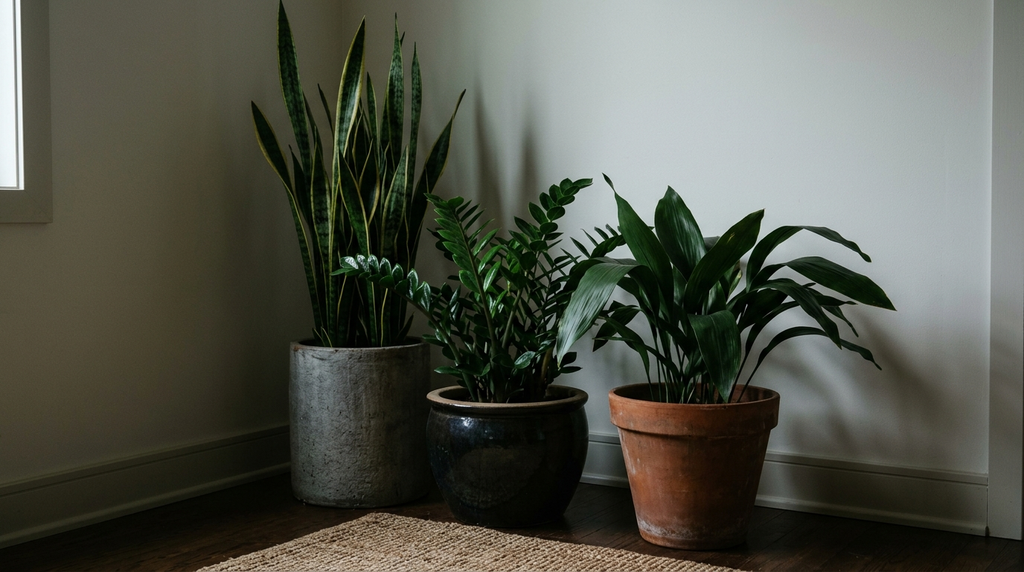
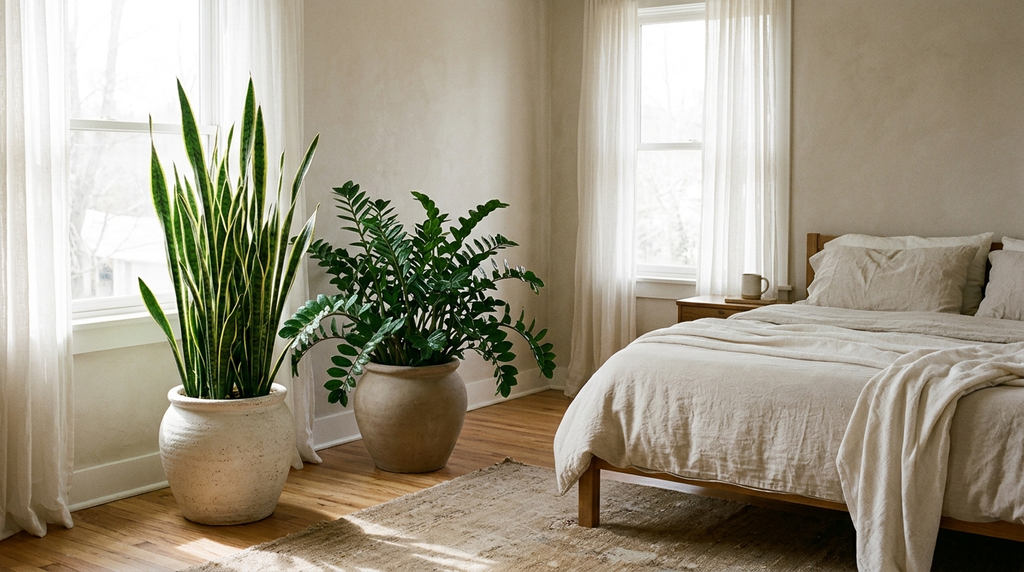
If your only free corner is far from a window, pick from this short list: snake plant, ZZ plant, dracaena, and corn plant. They will grow slower in low light, but they will survive it. Fiddle leaf fig, bird of paradise, olive tree, and banana plant will not – they need bright light, and in a dim corner they drop leaves and stretch. A tall plant in the wrong light is a large problem to move later, so match the plant to the light you actually have, not the light you wish you had.
Best tall plants for beginners
Start with snake plant, ZZ plant, monstera, rubber plant, or money tree. They forgive the two most common beginner mistakes – a missed watering, and light that is good but not perfect – better than a fiddle leaf fig does. Save fiddle leaf fig, bird of paradise, and olive tree for your second tall plant, once you know how much light your spot really gets through the seasons.
Best tall plants for corners and living rooms
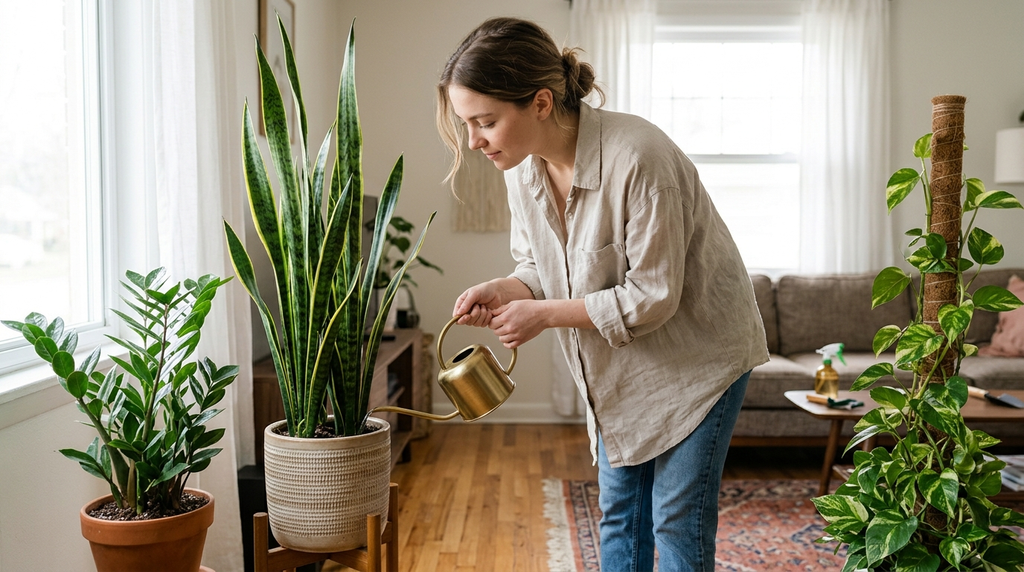
For a living-room corner, fiddle leaf fig, monstera, Kentia palm, and bird of paradise give the most impact. For a narrow corner or a spot beside a sofa, snake plant, dracaena, and ZZ plant fit where a palm would not. For an entryway, Kentia palm or money tree welcomes people without blocking the walkway. Whichever you pick, leave room to walk around it and to water it without moving furniture – leaves pressed against a wall or sofa bruise, collect dust, and get less light.
How to care for tall indoor plants
Tall plants need the same care as smaller ones, applied to more plant.
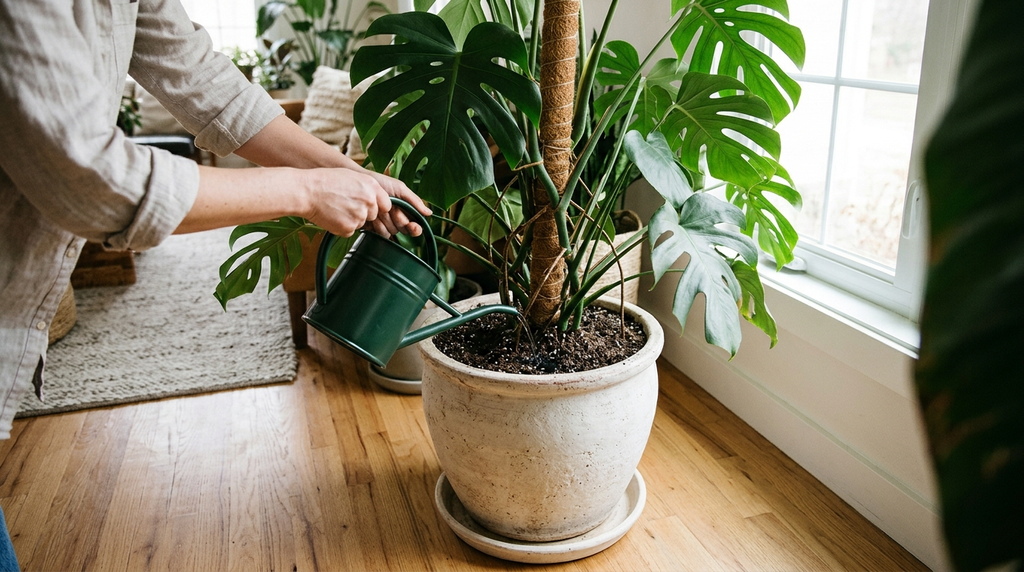
- Watering: Push your finger about 2 inches into the soil. If it feels dry at that depth, water slowly and evenly until water runs out of the drainage holes, then let the pot drain fully and empty the saucer after 15-30 minutes. If it still feels damp, wait and check again in a few days. Most tall houseplants need water every 1-2 weeks in spring and summer and less often in winter. Snake plant and ZZ plant need far less – every 2-3 weeks, only when the soil is fully dry.
- Support and staking: Monstera, Swiss cheese plant, and tall dracaena grow straighter with a moss pole or trellis. Tie the stem loosely to the support with soft plant ties, and retie as it grows. A plant that leans toward the window is asking for more light, not just a stake.
- Repotting: Repot only when roots come out of the drainage holes or growth has stalled for a full season, and go only 1-2 inches wider. A pot that is far too big holds wet soil the roots cannot use yet, which invites root rot. Use a light, loose indoor potting mix with perlite or coarse bark mixed in. See our Indoor Plant Soil guide for the mix to use.
- Cleaning large leaves: Dust blocks light. Wipe large leaves with a damp cloth every few weeks, and rotate the pot a quarter turn every week or two so the plant grows evenly instead of leaning.
- Feeding: Feed only in spring and summer, with a balanced liquid houseplant fertilizer diluted to half the strength on the label, once a month. Do not fertilize a dry plant – water it first, then feed – and do not fertilize in fall and winter.
Common problems
| Problem | Most likely cause | First step |
|---|---|---|
| Drooping leaves | Underwatering, or overwatering with root damage | Check the soil: dry means water; wet and drooping means stop watering and check the roots |
| Brown, crispy leaf tips | Low humidity, underwatering, or salts from tap water / fertilizer | Raise humidity, water more evenly, and flush the soil with plain water occasionally |
| Lower leaves turning yellow | Overwatering, or natural aging of the oldest leaves | Check the soil – if it is wet, let it dry out and water less |
| Leaning toward the window | Too little light on one side | Move it closer to bright, indirect light and rotate the pot regularly |
| Slow or no growth | Too little light, or the plant is root-bound | Check the light first, then check whether roots are circling the pot |
| Tall, bare stem with leaves only at the top | Too little light, or the plant was never pruned | Move it to brighter light and prune the top in spring to encourage branching |
Frequently asked questions
Fiddle leaf fig, Kentia palm, and rubber plant can all reach 8-10 feet indoors in good light, given time and a large enough pot. Most tall houseplants top out at 5-8 feet in a typical home. Buy the height you want rather than counting on fast growth – Kentia palm, in particular, grows slowly.
Snake plant. It tolerates low light, needs water only every 2-3 weeks, and survives neglect better than any other tall plant. ZZ plant is a close second for the same reasons.
Snake plant and ZZ plant. Both grow in low light, though more slowly than in bright light. Dracaena and corn plant are the next best options. Avoid fiddle leaf fig, bird of paradise, and olive tree in low light – they will drop leaves and stretch.
Most tall indoor plants grow 5-8 feet tall in a typical US home. A few – fiddle leaf fig, Kentia palm, rubber plant – can reach 10 feet with good light and time. The ceiling, the pot size, and the light in your room set the real limit.
Some are, some are not. Money tree, Kentia palm, Areca palm, olive tree, and banana plant are generally listed as pet-safe. Monstera, snake plant, ZZ plant, fiddle leaf fig, dracaena, and rubber plant are toxic to cats and dogs if eaten. Check a current ASPCA list for the exact plant, and keep toxic plants out of reach of curious pets.