
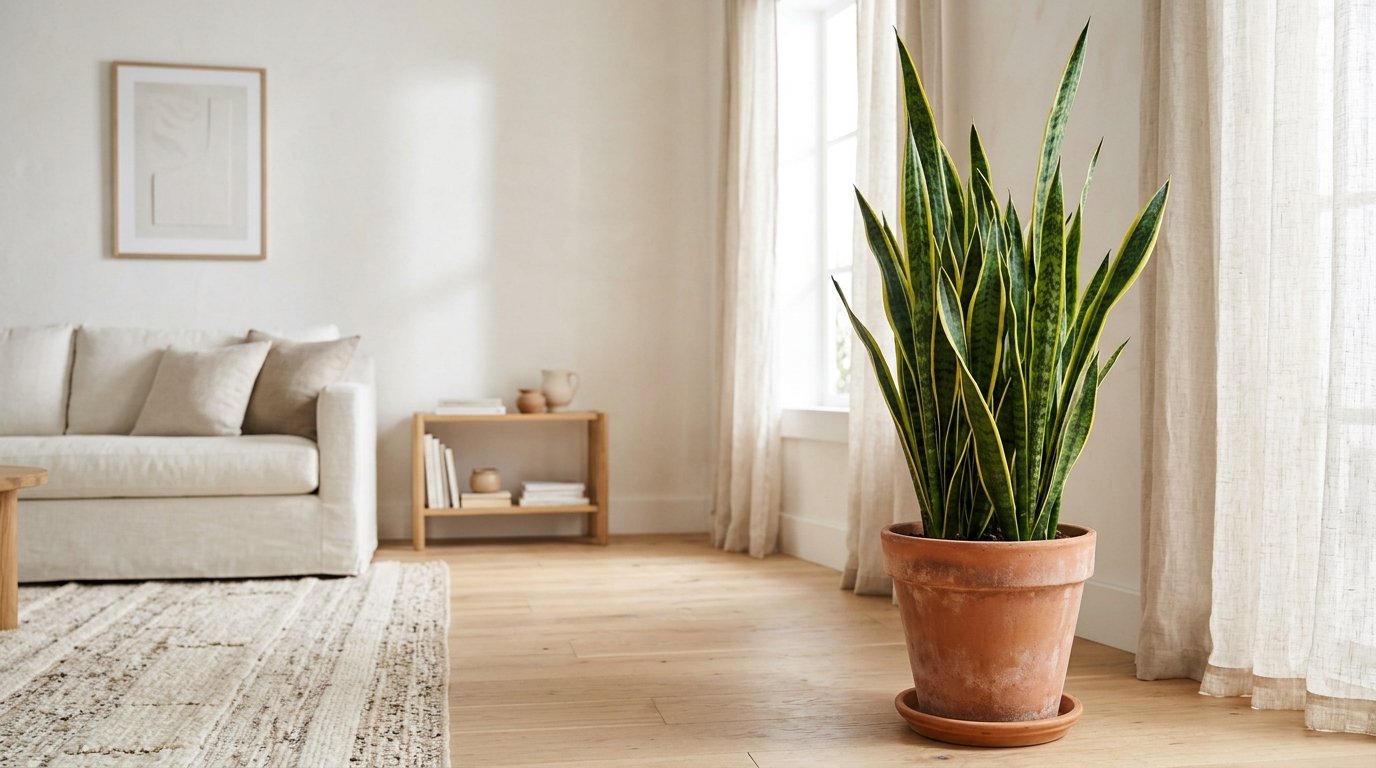
How to Take Care of a Snake Plant Indoors: A Simple Beginner Guide
Snake plant care is simple. Give the plant bright, indirect light. Water it only when the soil feels fully dry. Use a pot with drainage holes and fast-draining soil. That is the whole routine, in short.
A snake plant is one of the easiest indoor plants to keep. Its thick leaves store water. Low light and missed watering cause it little harm. The right light and a little care still give the best growth. This guide from Indoor Plants Hub shows you how to take care of a snake plant indoors, step by step.
What Makes a Snake Plant Happy?
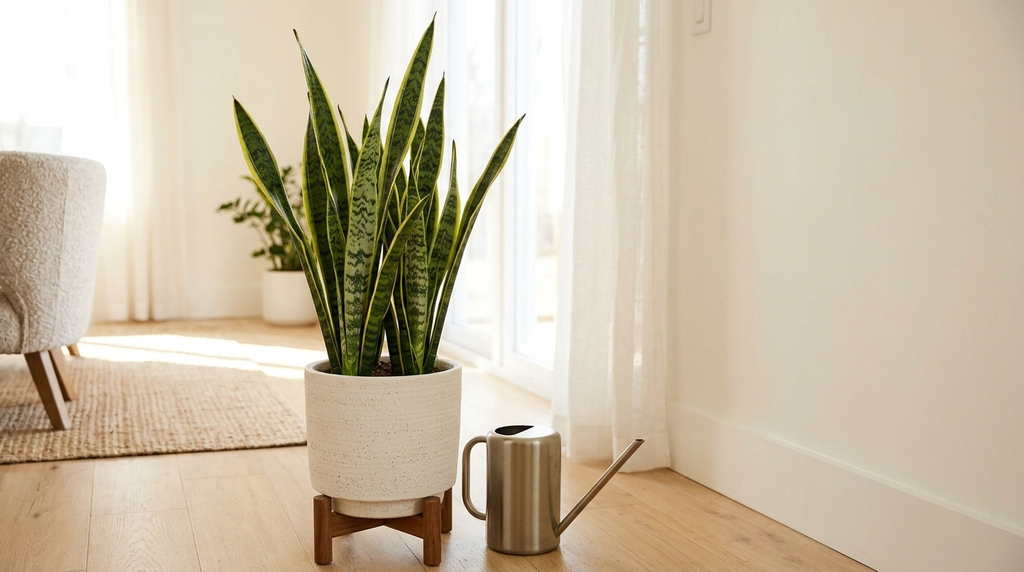
A happy snake plant has firm, upright leaves. New leaves appear in spring and summer. You do not need to care for it daily. Light, dry soil between waterings, and a pot that drains well are what it needs.
Give it bright, indirect light if you can. Let the soil dry out fully before you water again. Keep it warm and away from cold drafts. Feed it little, and only in spring and summer. Repot it only when the roots fill the pot. Do these few things well, and the plant will stay healthy for years.
A snake plant is also called Dracaena trifasciata. It was long sold as Sansevieria trifasciata. Both names still appear on plant tags. The care is the same either way.
How Much Light Does a Snake Plant Need?
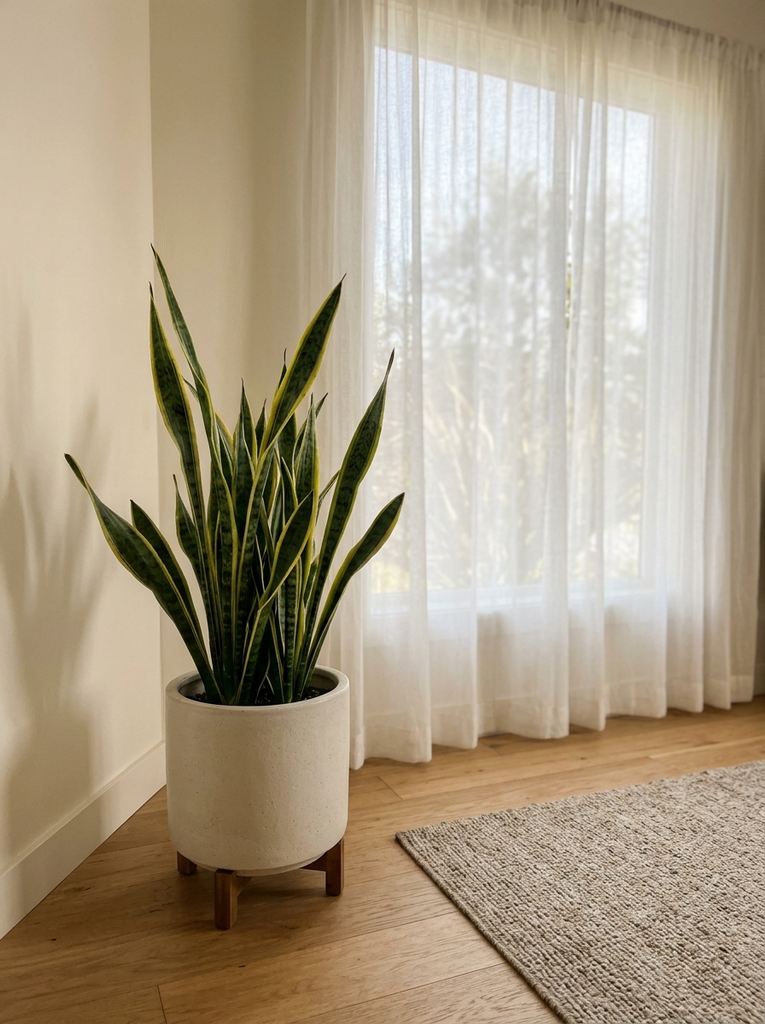
Bright, indirect light is best for a snake plant. Put it a few feet from a bright window. An east-facing window suits it well. It gets gentle morning sun and bright light for the rest of the day.
A snake plant tolerates low light. It will stay alive in a dim room or a hall. Growth will slow, though, and new leaves may look pale or thin. The yellow edges on some types may fade in low light. Move the plant to a brighter spot if growth stops for months.
Avoid harsh midday sun through glass. Strong sun can bleach or scorch the leaves. If you move a plant from low light to bright light, do it over one to two weeks. A sudden move can burn leaves that are used to shade.
Turn the pot a quarter turn each week. This keeps the plant growing straight, not leaning toward the window.
How Often Should You Water a Snake Plant?
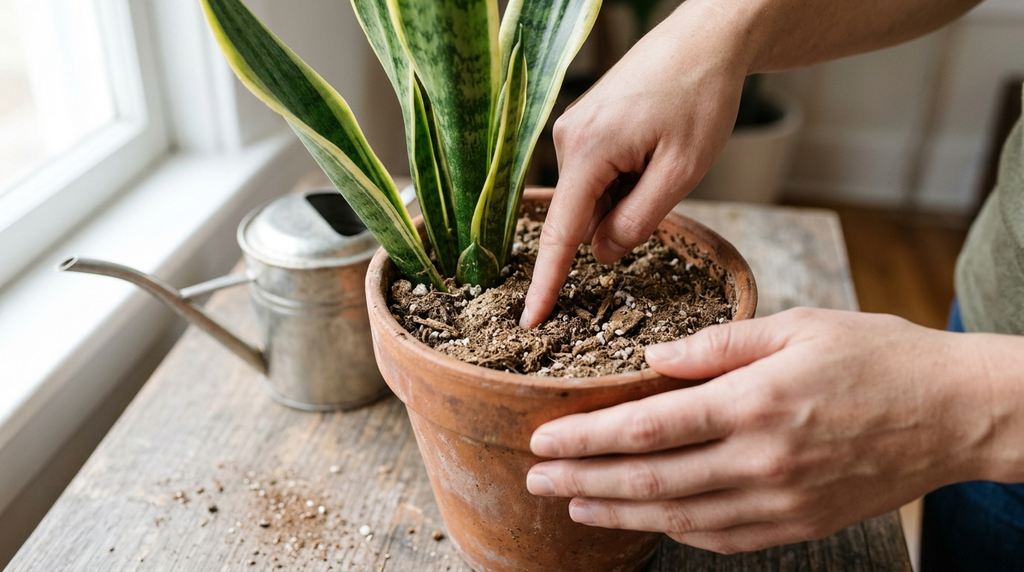
Water a snake plant only when the soil feels fully dry. Push your finger deep into the soil. If it feels cool or damp, wait. If it feels dry and crumbly, water well. Let water run out of the drain holes. Empty the saucer so the roots do not sit in water.
In spring and summer, water about every two to three weeks. In autumn and winter, water about once a month, or even less. A plant in bright light uses water faster than a plant in a dim room. A small pot dries faster than a large pot. Check the soil, not the calendar.
Overwatering is the main way people kill a snake plant. Its thick leaves store water. Its roots rot fast in wet soil. Yellow, soft leaves often point to too much water. Do not water on a fixed weekly schedule. Do not pour water into the centre of the leaves. Water the soil, not the crown.
What Is the Best Soil and Pot for a Snake Plant?
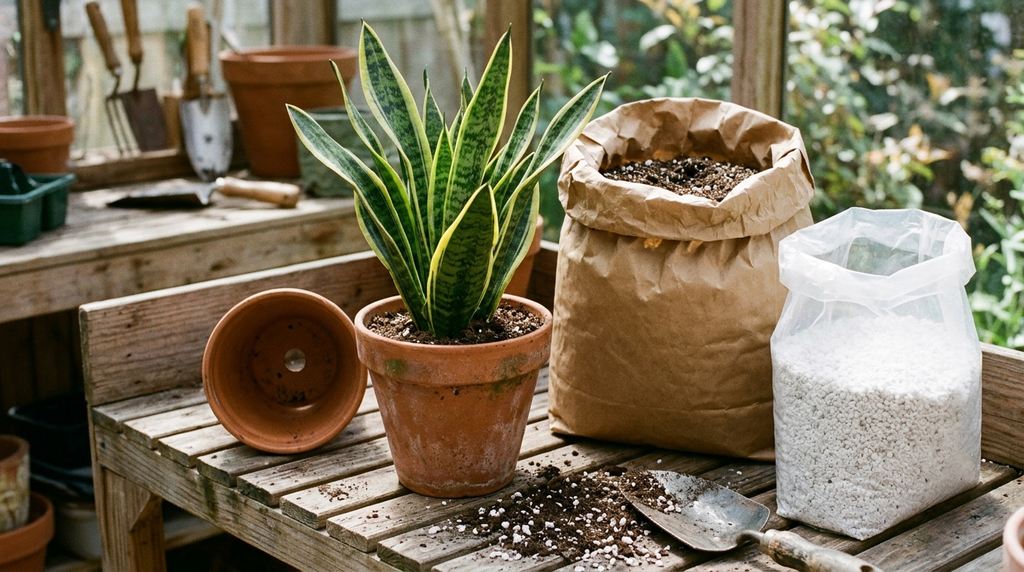
A snake plant needs soil that drains fast. Use a cactus or succulent mix. Or mix regular potting soil with extra perlite or coarse sand. The soil should feel gritty, not heavy and wet. Good drainage matters more than rich soil.
Use a pot with a drainage hole. This is a must. A terracotta pot helps the soil dry faster. It pulls extra water out through its walls. A plastic pot holds water longer, so water even less often in plastic.
Pick a snug pot, not a huge one. A pot that is too large holds too much wet soil. Leave about 2 to 3 cm of space between the root ball and the pot rim. That gives the plant room to grow without staying wet for long.
Where Is the Best Place to Put a Snake Plant Indoors?
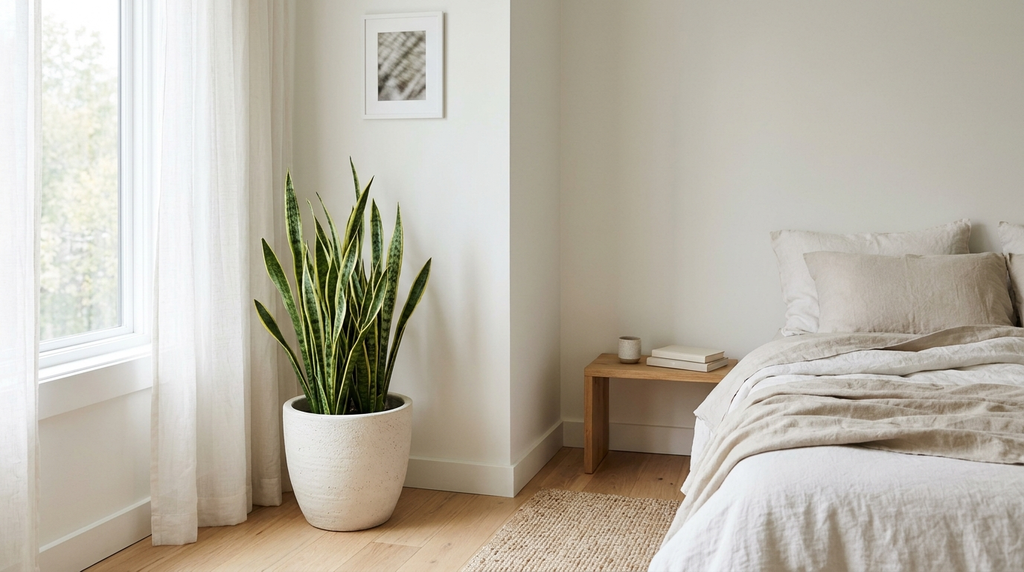
The best place for a snake plant is a bright room with indirect light. A living room near an east window works well. A bedroom with a bright window also works. Offices and halls with some daylight work too, if the plant gets a few hours of bright light each day.
Keep the plant away from cold drafts. Do not put it next to a cold window in winter. Keep it away from heat vents and air conditioning vents too. Dry, hot air can brown the leaf tips over time.
A snake plant suits a bedroom, a living room, a hall, and an office desk. It copes with normal room humidity. You do not need to mist it. A bathroom can work only if it has a bright window. A dark bathroom with no window is a poor spot, even for a snake plant.
How Do You Feed and Repot a Snake Plant?
Feed a snake plant little, and only in spring and summer. Use a balanced liquid feed at half the strength on the pack. Feed once a month at most. Do not feed a dry plant. Water it first, then feed it. Stop feeding in autumn and winter. Too much feed can burn the leaf tips and build salts in the soil.
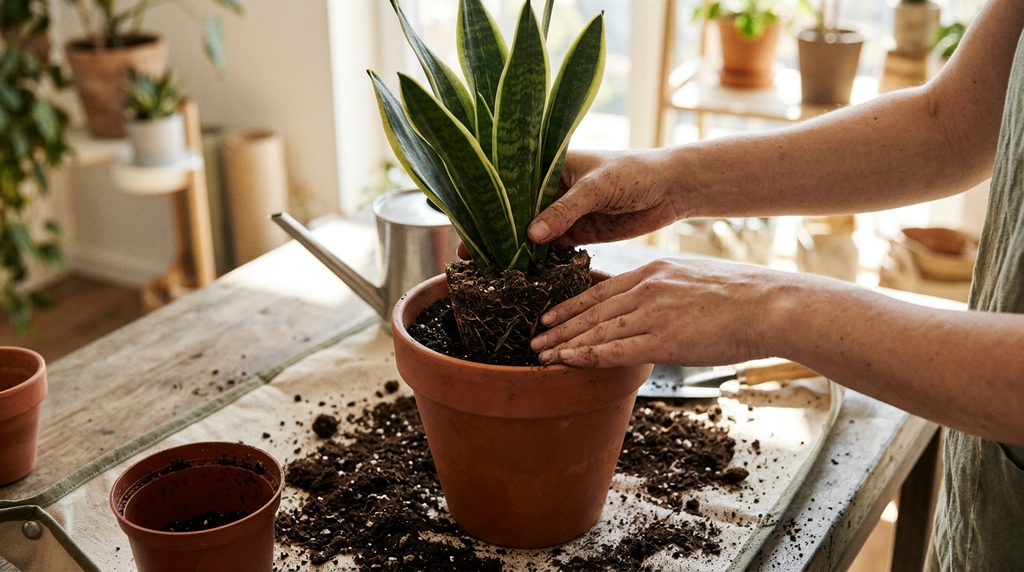
Repot a snake plant every two to three years. Do it sooner if roots grow out of the drain holes. Spring is the best time, when growth starts again. Move up one pot size only. Add fresh, fast-draining mix. Set the plant at the same depth as before. Water lightly after repotting, then let the soil dry out fully.
You can divide a crowded plant when you repot it. Gently pull apart the rhizomes, the thick underground stems. Each part should have roots and at least one leaf. Pot each part in its own pot. This keeps the leaf colour true, even on variegated types.
For light, water, and soil basics, see the University of Arizona Cooperative Extension guide to indoor plant selection and care. The Mississippi State University Extension guide to care and selection of indoor plants covers the same basics in plain language. For this plant in detail, see the NC State Extension profile for Dracaena trifasciata.
How Do You Fix Common Snake Plant Problems?
Most snake plant problems come from too much water or too little light. Read the leaves first. They show the problem early. Act fast, and most plants recover.
Brown Tips
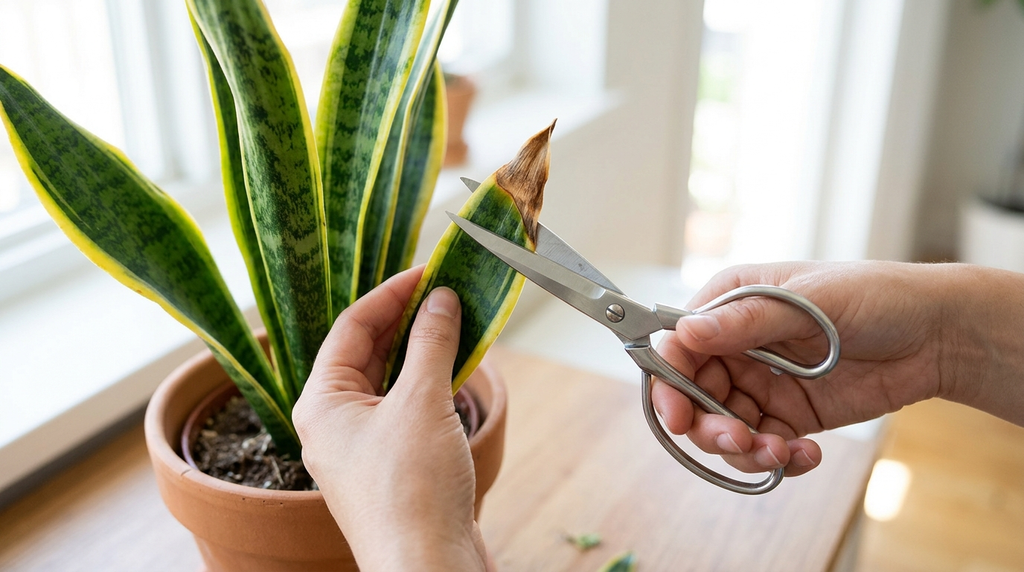
Brown, dry tips are common and often cosmetic. They can come from dry air, salts in tap water, or cold drafts. They can also come from long dry spells or too much direct sun. Trim just the brown part with clean scissors. Cut at an angle to keep the leaf point. Do not cut into green leaf. Try filtered or rainwater if your tap water is hard. Move the plant away from vents and cold windows.
Yellow or Mushy Leaves
Yellow, soft leaves often point to overwatering. Mushy leaves at the base point to root rot. Stop watering at once. Take the plant out of its pot. Check the roots. Healthy roots feel firm and pale. Trim any brown, mushy roots with clean scissors. Let the plant dry for a day. Repot it in fresh, dry, fast-draining mix. Water only when the soil feels fully dry again.
Leaves Falling Over
Leaves fall over when the roots are weak or the plant is top heavy. Overwatering can rot the roots, so the leaves lose support. Low light can also make leaves thin and floppy. Check the soil first. If it feels wet, let it dry out fully. If roots look mushy, trim them and repot as above. Tie tall leaves to a stake for a short time while new roots grow. Move the plant to brighter light.
Not Growing
A snake plant grows slow in winter and in low light. That is normal. If it does not grow in spring or summer, check the light first. Move it closer to a bright window. Check the pot too. A pot that is too large keeps the soil wet and slows growth. Be patient after repotting. New growth often starts a few weeks later, not at once.
How Do You Know If Your Snake Plant Is Healthy?
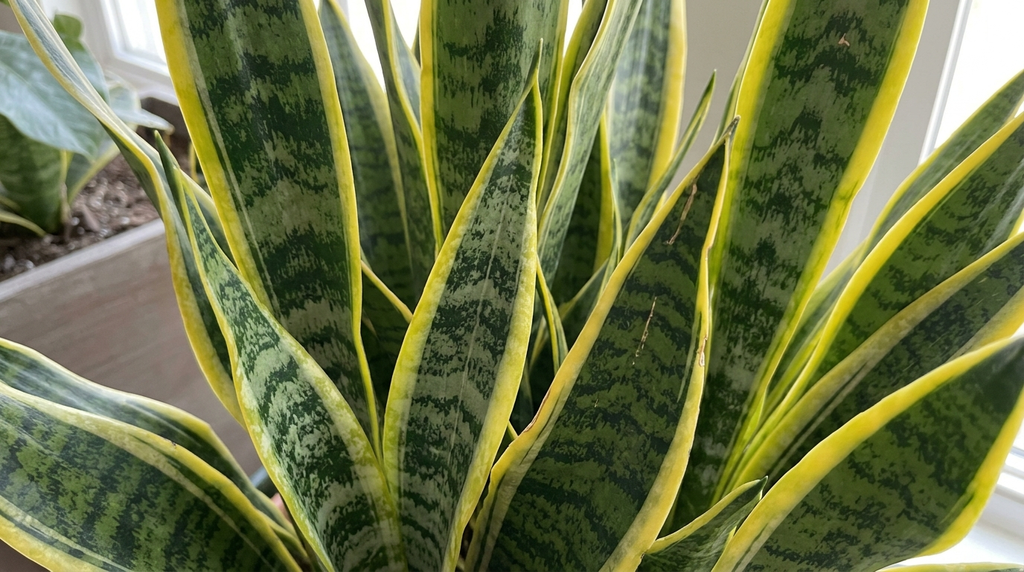
A healthy snake plant has firm, upright leaves. The leaves feel thick and plump, not soft or wrinkled. The green looks rich, and the yellow edges stay clear on variegated types. New leaves or pups appear in spring and summer. The soil smells fresh, not sour. The roots feel firm and pale when you check them.
Watch for warning signs. Soft, yellow leaves point to too much water. Thin, pale leaves point to too little light. Brown tips point to dry air, tap water salts, or cold drafts. Leaves that lean hard toward a window need a turn each week, or a brighter spot. A plant that stops growing for a full year in good light may need fresh soil or a smaller pot.
Frequently Asked Questions About Snake Plant Care
Should I cut the brown tips off my snake plant?
Yes, you can cut brown tips off a snake plant. Trim just the brown part with clean scissors. Cut at an angle to keep the leaf point. Do not cut into green leaf. Then fix the cause, such as dry air, tap water salts, or a cold draft, so new tips stay green.
Where is the best place to put a snake plant?
The best place is a bright room with indirect light, a few feet from a window. An east-facing window is ideal. A bedroom, living room, or office with daylight works well. Keep the plant away from cold drafts and heat vents. A dark room with no window is a poor spot.
How do I know if my snake plant is healthy?
A healthy snake plant has firm, upright leaves that feel thick and plump. New leaves appear in spring and summer. The soil smells fresh, and the roots feel firm and pale. Soft, yellow leaves or mushy bases are warning signs, and they often point to overwatering.
What makes a snake plant happy?
Bright, indirect light makes a snake plant happy. Dry soil between waterings helps too. A pot with drainage holes and fast-draining soil keeps the roots healthy. Warm air, no cold drafts, and a little feed in spring and summer complete the routine. You can start with the care guides on Indoor Plants Hub.
How often should I water a snake plant indoors?
Water only when the soil feels fully dry. That is about every two to three weeks in spring and summer, and about once a month in autumn and winter. A plant in bright light dries faster than a plant in low light. Always check the soil with your finger before you water.
Is a snake plant safe for cats and dogs?
No, a snake plant is not safe for cats and dogs if they chew it. The ASPCA lists it as toxic to cats and dogs because of saponins. Chewing can cause nausea, vomiting, and diarrhoea. Keep the plant out of reach of pets. Call your vet at once if your pet eats part of the plant.
Start With a Simple Snake Plant Routine
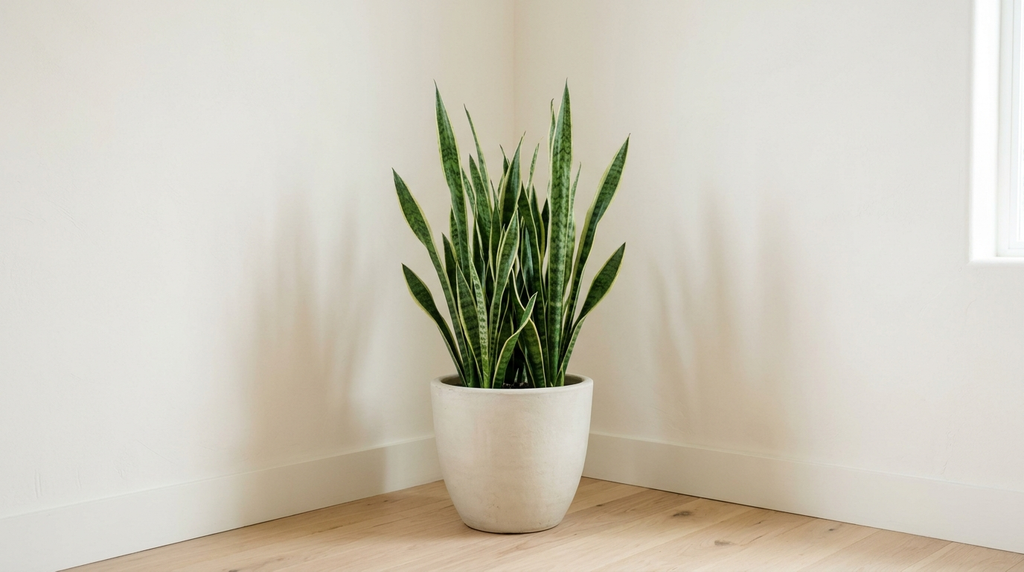
Snake plant care is simple once you know the routine. Give the plant bright, indirect light. Water it only when the soil feels fully dry. Use a pot with drainage holes and fast-draining soil. Feed it little, and only in spring and summer.
Your next step is simple. Check the soil today with your finger. If it feels dry, water well and empty the saucer. If it feels damp, wait and check again in a few days.
Next, explore Indoor Plants Hub and read more about Sarah Green, Founder and Plant Care Writer


2 Comments