
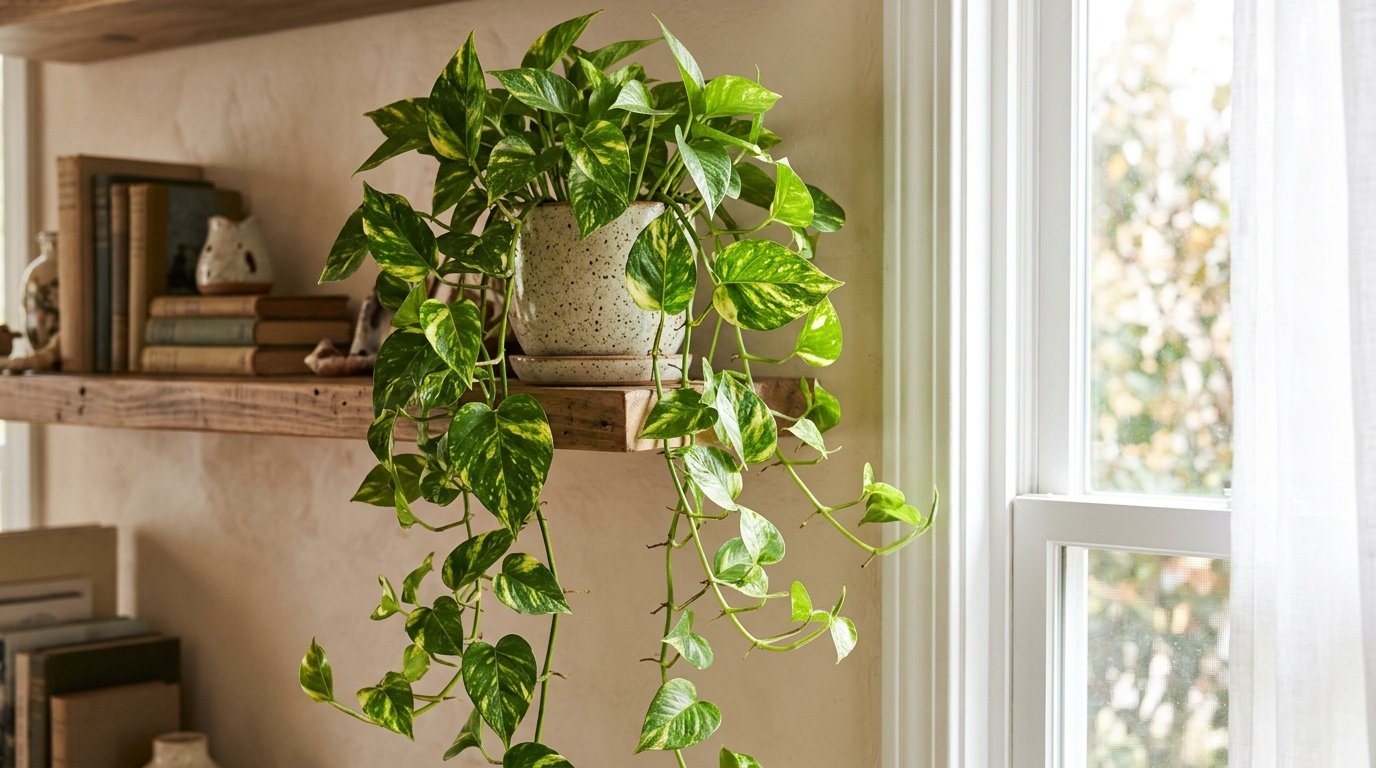
How to Take Care of a Pothos Plant: A Simple Beginner Guide
Pothos is one of the easiest indoor plants you can grow. Give it bright, indirect light, water it only when the top 1 to 2 inches of soil feel dry, and put it in a pot with drainage holes. That is most of pothos care. It tolerates low light, missed waterings, and normal home temperatures better than almost any other houseplant. That is why it is often the first plant people buy.
Pothos, also called devil’s ivy, is a tropical vine with heart-shaped leaves. Its scientific name is Epipremnum aureum. It comes from the Solomon Islands in the South Pacific. In the wild, it climbs trees with aerial roots. At home, you can let it trail from a shelf, hang it in a basket, or train it up a pole. This guide shows you how to take care of a pothos plant indoors, step by step. You will learn the light, water, soil, pot, and feeding it needs, how to tell if it is happy, and how to fix the most common problems.
How to Take Care of a Pothos Plant
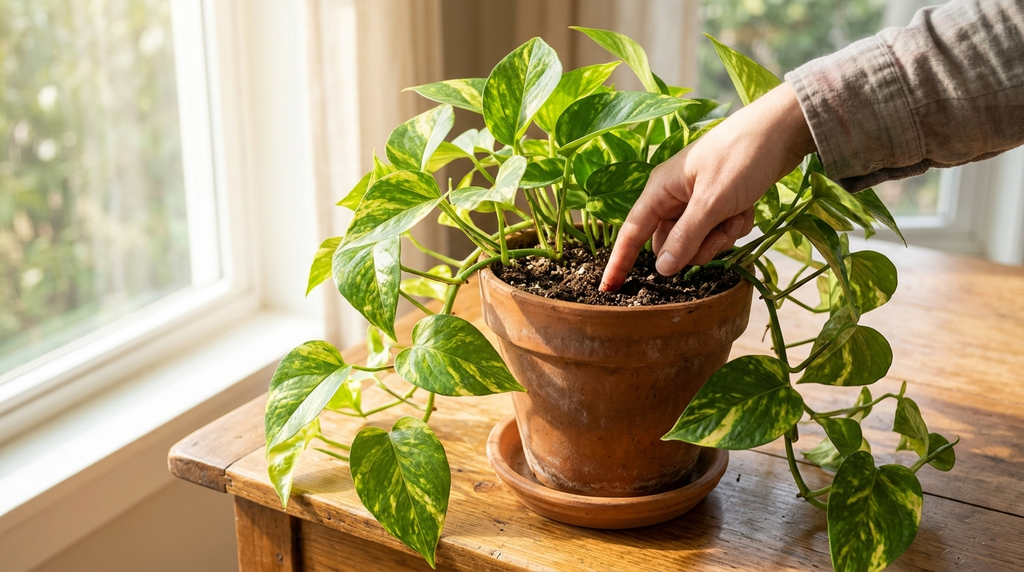
The short answer is simple. Put your pothos in bright, indirect light. Water it when the top 1 to 2 inches of soil feel dry, usually every 1 to 2 weeks. Use standard indoor potting mix in a pot with drainage holes. Keep it between 65 and 85 degrees Fahrenheit, away from cold drafts. Feed it lightly in spring and summer. Repot it every 1 to 2 years, one pot size up.
That is the whole routine. Pothos forgives a lot. It will survive a missed watering, a dim corner, and a week away from home. The one thing it will not forgive is sitting in soggy soil. Overwatering causes root rot, and root rot is the main way people kill a pothos. If you are unsure whether to water, wait another day or two. Check the soil with your finger first.
Pothos quick care card
- Light: bright, indirect light is best. It tolerates low light, but variegated types lose their pattern there.
- Water: when the top 1 to 2 inches of soil feel dry. Usually every 1 to 2 weeks. Less in winter.
- Soil: standard indoor potting mix, well-draining, in a pot with drainage holes.
- Temperature: 65 to 85 degrees Fahrenheit. Keep it above 50 degrees Fahrenheit.
- Humidity: normal home air is fine. It likes 40 to 60 percent humidity, but it adapts to drier air.
- Feeding: balanced liquid fertilizer at half strength, once a month in spring and summer. None in winter.
- Pets: toxic to cats and dogs, according to the ASPCA. Keep it out of their reach.
Light: What Pothos Needs
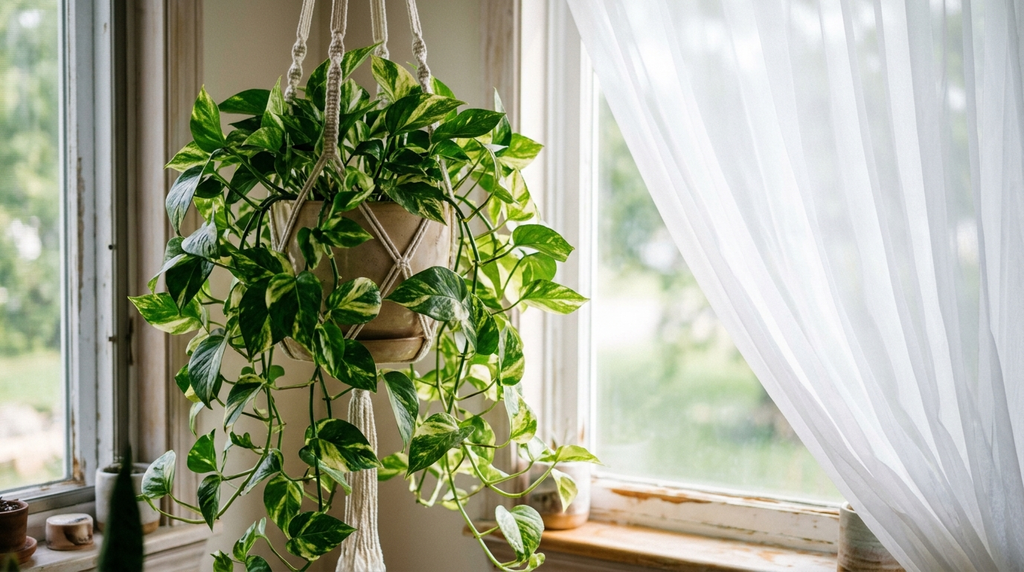
Pothos grows best in bright, indirect light. That means a bright spot near a window, where the sun does not hit the leaves for long. An east-facing window is ideal. A spot a few feet back from a south or west window works well too. In bright, indirect light, pothos grows fast and keeps its leaf color. Golden pothos keeps its yellow marks. Marble Queen keeps its white marks.
Pothos can survive in low light. It will grow in a north-facing window, or on a shelf across the room from a window. But it will grow slowly there. Variegated types will lose their pattern and turn plain green. The plant is telling you it needs more light. Move it closer to a brighter window, and the new leaves will show more color.
Direct sun is the one light pothos does not like. Strong sun scorches the leaves. They turn pale, then brown and crispy at the edges. Move a sunburned pothos a few feet back from the window, or behind a sheer curtain. Our How Much Light Do Indoor Plants Need? guide explains low, medium, and high light in plain words, and how to test the light in your room.
Can pothos grow in a dark room?
Pothos can cope with a dark room better than most plants. It can even grow under fluorescent office lights with no natural light at all. But a dark room is not its best home. It will grow very slowly, and its leaves will stay small. No plant grows with no light at all. If your room is very dark, add a grow light above the plant for 12 to 14 hours a day.
Water: How Often and How Much
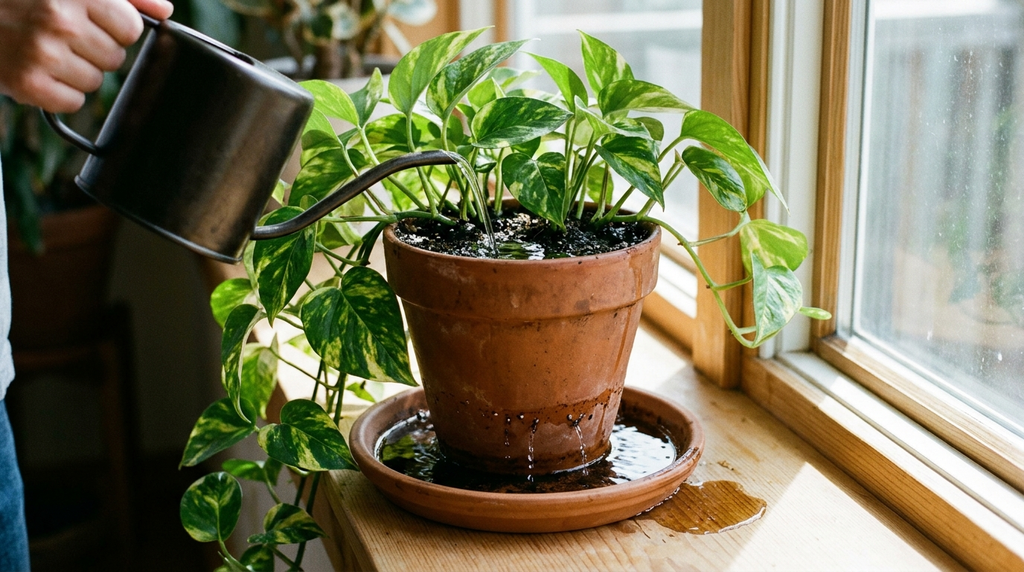
Water your pothos when the top 1 to 2 inches of soil feel dry. Push your finger into the soil to check. If the top layer feels dry, water it well. Pour water slowly until it runs out of the drainage holes. Then empty the saucer, so the pot does not sit in water. In bright light, you will water about every 1 to 2 weeks. In winter, when growth slows, you may water only every 2 to 3 weeks.
Do not water on a fixed schedule. The calendar is the wrong tool. Your finger is the right one. A pothos in bright light uses water fast. The same plant in a dim room uses water slowly. A small pot dries out fast. A big pot stays wet for longer. Check the soil first, every time.
Overwatering is the most common pothos mistake. If the soil stays wet for days, the roots cannot breathe. They turn brown and mushy. That is root rot. The leaves turn yellow, and the stems go soft. If you see that, stop watering. Let the soil dry out fully. Our How to Water Indoor Plants guide explains the finger test and how to water deeply without overwatering.
What if the leaves droop?
Drooping leaves can mean two opposite things. If the soil is dry, the plant is thirsty. Water it, and the leaves should lift again within a few hours. Pothos is good at telling you it is thirsty this way. If the soil is wet and the plant still droops, that is a warning sign. The roots may be rotting. Let the soil dry out. If it does not recover, take the plant out of the pot and check the roots. Healthy roots are white and firm. Rotting roots are brown and soft.
Soil and Pot: The Right Home
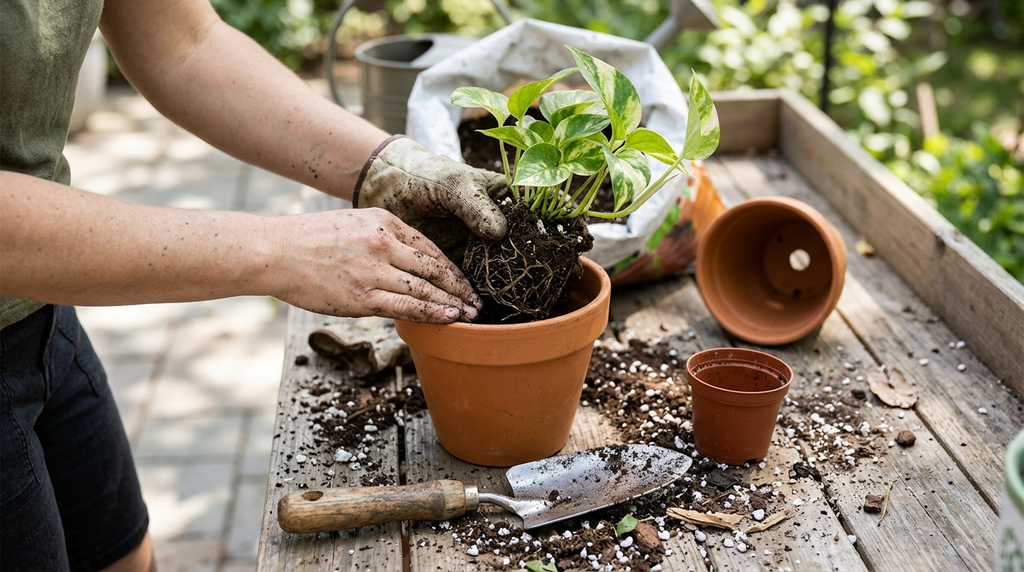
Pothos is not picky about soil. Any standard indoor potting mix will work, as long as it drains well. A mix with a little perlite or orchid bark helps water flow through. That keeps the roots from sitting in wet soil. The pot matters more than the soil brand. It must have drainage holes. Without them, water collects at the bottom, and the roots rot.
Pothos likes a snug pot. Do not put a small plant in a huge pot. The extra soil stays wet, and the roots cannot use it. Go up only one pot size at a time, about 1 to 2 inches wider than the root ball. Repot every 1 to 2 years, in spring, or when you see roots coming out of the drainage holes. That is the sign it has outgrown its pot.
Do pothos like big pots or small pots?
Small pots suit pothos better than big ones. A pot only about 2 inches wider than the root ball is right. A pot that is too big holds wet soil the roots cannot reach. That wet soil can rot the roots. So when you repot, go one size up, not three. Your pothos will grow faster in a snug pot than in a pot that is too large.
Feeding and Temperature
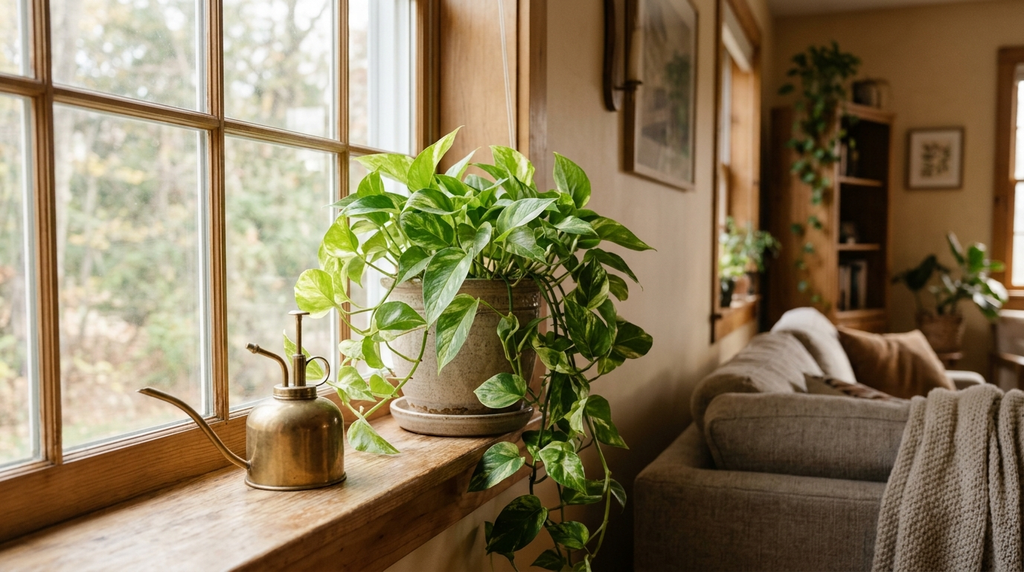
Pothos is a light feeder. Feed it with a balanced liquid fertilizer at half strength, once a month, in spring and summer. That is enough. Do not feed it in winter, when it is not growing. The salts from fertilizer build up in the soil in winter, and they can burn the leaf tips brown.
Temperature is easy. Pothos likes normal home temperatures, between 65 and 85 degrees Fahrenheit. It can cope with warmer rooms. Cold is the problem. Keep it above 50 degrees Fahrenheit. Do not put it next to a cold window in winter, or in the path of a cold draft. A sudden cold snap can cause brown patches on the leaves.
Humidity is simple too. Pothos likes humid air, but normal home air is fine. It is happy at 40 to 60 percent humidity. You do not need a humidifier. If the air in your home is very dry in winter, and you see brown, crispy leaf tips, group your plants together. That creates a small humid space around them. Or stand the pot on a tray of pebbles with water in it. Keep the pot above the water, not sitting in it.
Climb or Hang? How to Shape Your Pothos
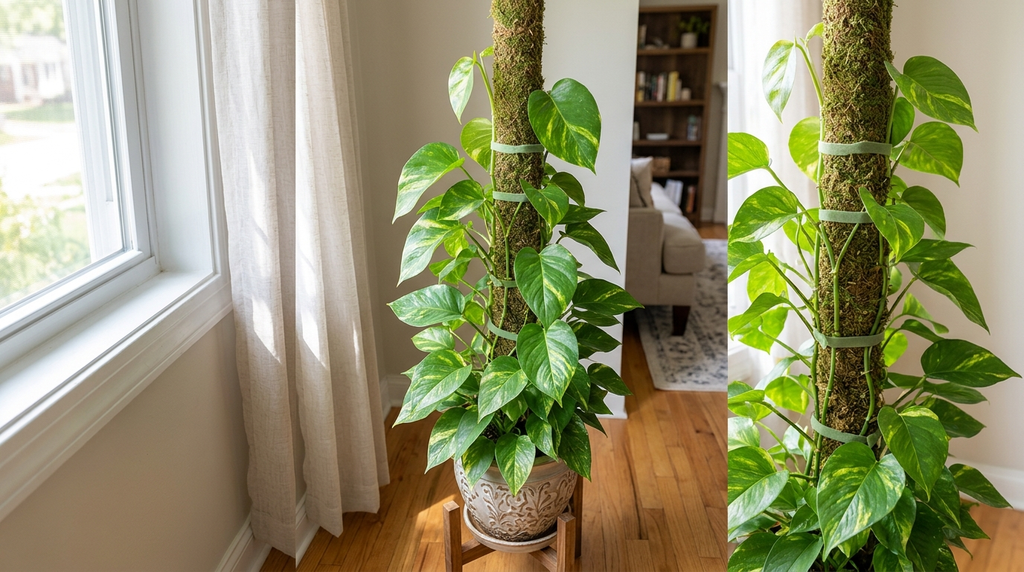
Pothos is a natural climber. In the wild, it climbs trees with aerial roots, reaching toward the sun. At home, it will do either. It will trail down from a shelf or a hanging basket. Or it will climb up a pole, a trellis, or a wall. Both are fine. The choice is yours.
Climbing has one clear benefit. When pothos climbs, its leaves get bigger. The higher it climbs, the larger the leaves grow. A pothos on a moss pole can grow leaves much larger than the same plant trailing from a shelf. To train it to climb, gently wrap the vines around the pole. Tie them loosely with soft ties or small clips. The aerial roots will grip the pole on their own over time.
Hanging is the easier choice. Put the pothos in a hanging basket, or on a high shelf, and let the vines fall. Trim the vines back now and then to keep the plant bushy. If you never trim it, the vines grow long and thin, with bare stretches of stem. Pruning is simple. Cut just above a leaf node, the small bump on the stem where a leaf grows. New growth will start from that node.
How long does a pothos live?
A pothos plant usually lives 5 to 10 years indoors. With steady care, it can live much longer. Some pothos plants live for decades. The key is to keep the roots healthy. Avoid overwatering, and repot it every 1 to 2 years. When an old vine gets bare and leggy, you can cut it back and root the cuttings. That starts a new plant from the old one, and the cycle goes on.
How to Tell If Your Pothos Is Happy
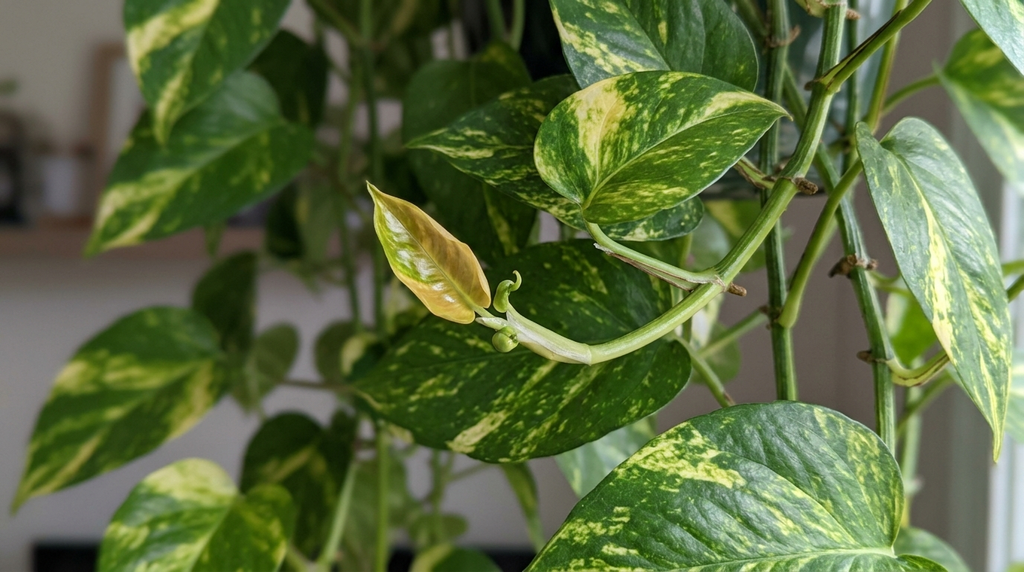
A happy pothos shows it clearly. New leaves appear often in spring and summer. The leaves are firm, green, and full of color. Vines grow steadily, with leaves spaced close together. The whole plant looks full, not bare. Its roots are white and firm when you repot it. That is a healthy pothos.
An unhappy pothos shows it too. Long, bare vines with small leaves mean it needs more light. Yellow leaves often mean too much water. Brown, crispy tips often mean dry air, or salts from too much fertilizer. Leaves that droop in dry soil mean it is thirsty. Leaves that droop in wet soil mean the roots are in trouble. Check the light and the soil first. Those two fix most pothos problems.
What makes a pothos happy?
Three things make a pothos happy. Bright, indirect light, so it can grow and keep its leaf color. Water only when the top 1 to 2 inches of soil feel dry, so the roots stay healthy. And a snug pot with drainage holes, so the roots never sit in water. Get those three right, and your pothos will grow fast and look full. Everything else is a small detail.
Common Pothos Problems
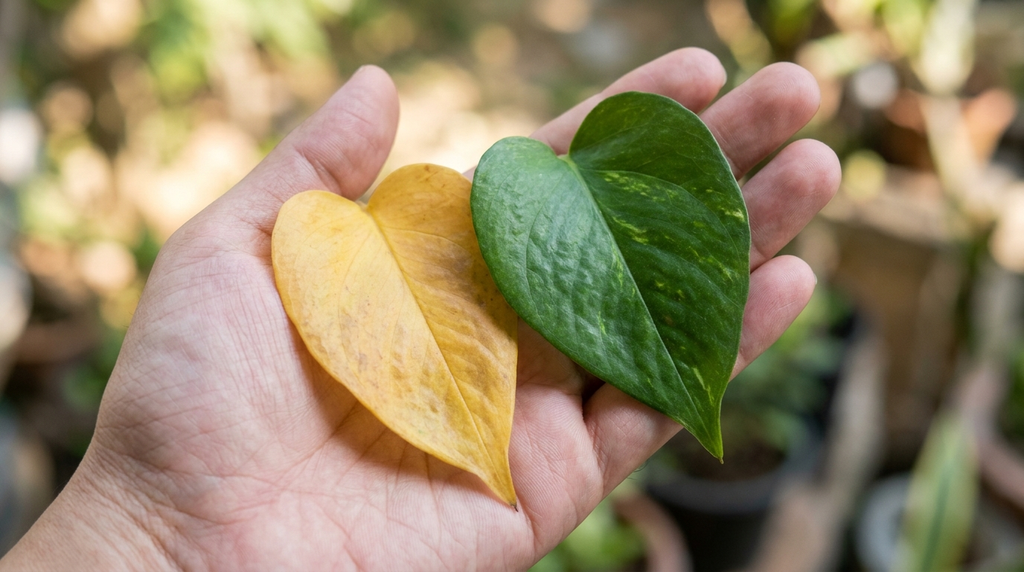
Most pothos problems are easy to fix, once you know the cause. The symptom tells you where to look. Start with the soil and the light, before you change anything else. The wrong fix can make the real problem worse.
Yellow leaves are the most common pothos problem. One or two yellow leaves at the base of an old vine are normal. Old leaves age and drop. Many yellow leaves at once are a warning. Overwatering is the most common cause. Check the soil 2 inches down with your finger. If it feels wet, stop watering. Let the pot dry out for 7 to 10 days before the next drink. Yellow leaves will not turn green again, but new growth will be healthy.
Brown, crispy tips have three usual causes. Dry air in a heated room, salts from too much fertilizer, or tap water minerals. Let tap water sit overnight before you use it. That lets the chlorine evaporate. Flush the soil with plain water every few months to wash out salts. Move the plant away from heating vents. Leggy vines, with long bare stretches of stem, mean the plant needs more light. Move it closer to a bright window, and trim the bare vines back. New growth will be fuller.
Is pothos safe for pets and children?
No, pothos is not safe for pets and children to eat. All parts of the plant are toxic to cats, dogs, and horses, according to the ASPCA. It contains calcium oxalate crystals. If a pet chews the leaves, it can cause mouth irritation, drooling, and vomiting. Keep pothos on a high shelf, in a hanging basket, or in a room pets cannot reach. If a child or pet eats part of the plant, contact your vet or a poison helpline at once. This is the main disadvantage of pothos. It is a tough, easy plant, but it is not a pet-safe plant.
Frequently Asked Questions
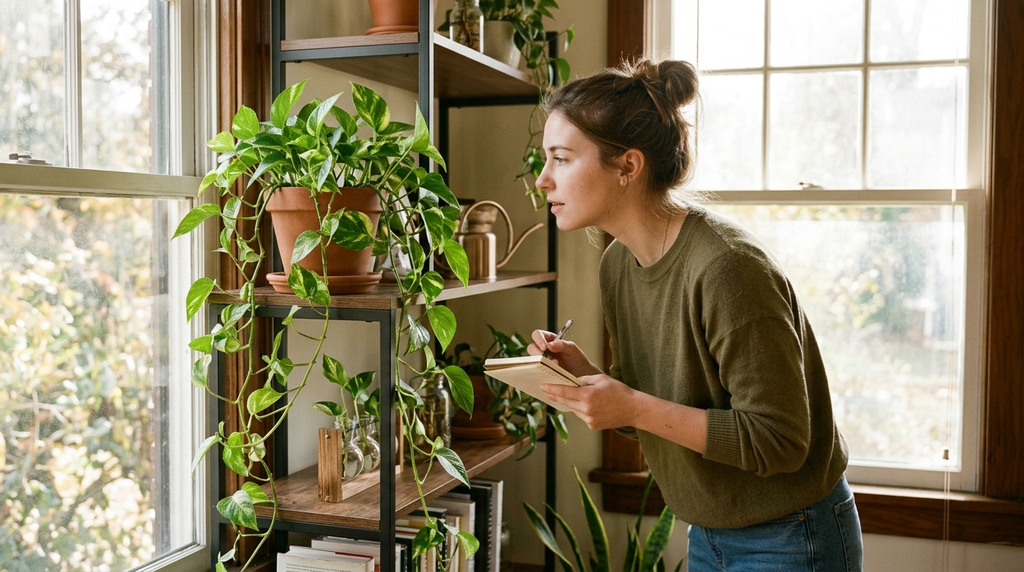
How do I tell if my pothos is happy?
A happy pothos grows new leaves often in spring and summer. Its leaves are firm, green, and full of color. Its vines grow steadily, with leaves spaced close together. The plant looks full, not bare. If the vines are long and bare, the leaves are small, or the growth has stopped, the plant needs more light or better watering.
Do pothos prefer to climb or hang?
Pothos will do either, and both are healthy. It is a natural climber, so climbing gives it larger leaves. Hanging is easier, and it looks good on a shelf or in a basket. If you want big leaves, train it up a pole. If you want a trailing plant, let it hang, and trim it back now and then to keep it bushy.
What makes a pothos happy?
Bright, indirect light, water only when the top 1 to 2 inches of soil feel dry, and a snug pot with drainage holes. Those three things matter most. Keep it between 65 and 85 degrees Fahrenheit, feed it lightly in spring and summer, and repot it every 1 to 2 years. That is all a pothos needs to grow fast and look full.
What is the lifespan of a pothos plant?
A pothos plant usually lives 5 to 10 years indoors. With steady care, it can live much longer. Some pothos plants live for decades. Keep the roots healthy, avoid overwatering, and repot it every 1 to 2 years. When an old vine gets bare, cut it back and root the cuttings to start a new plant.
Do pothos like big pots or small pots?
Pothos likes a small, snug pot. Choose a pot only about 2 inches wider than the root ball. Go up only one pot size at a time when you repot. A pot that is too big holds wet soil the roots cannot reach, and that wet soil can rot the roots.
Can I sleep with pothos in my room?
Yes, you can sleep with a pothos in your room. It is safe to have in a bedroom. Pothos does not release anything harmful at night. It is a common bedroom plant. The only caution is pets. If your cat or dog sleeps in the room and chews plants, keep the pothos out of their reach, because it is toxic to pets.
Conclusion
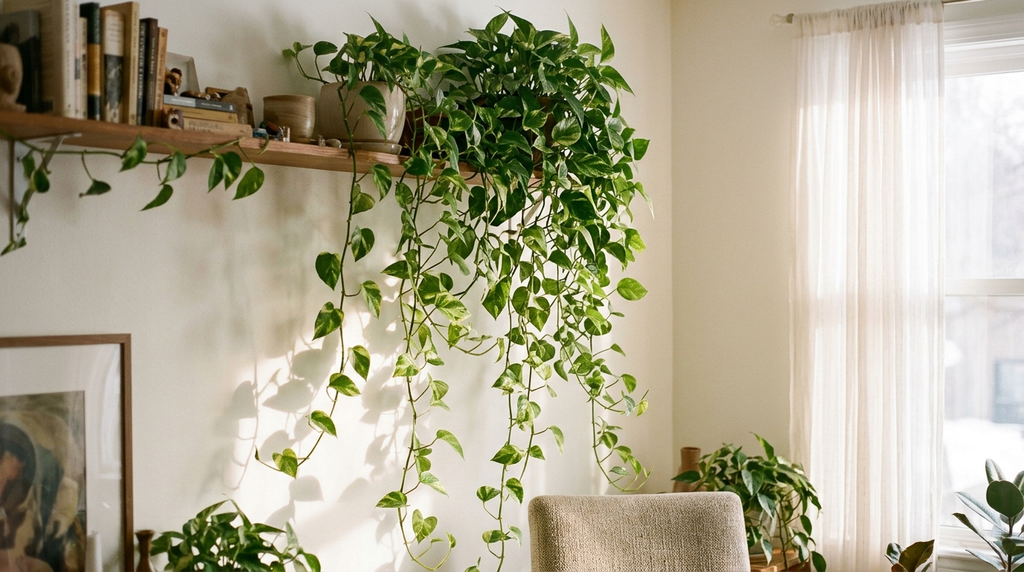
Pothos is the best first plant for a reason. It forgives missed waterings, dim rooms, and busy weeks. Give it bright, indirect light, water it only when the top 1 to 2 inches of soil feel dry, and keep it in a snug pot with drainage holes. That is most of pothos care. Watch how it grows, and it will tell you what it needs.
Your next step is simple. Check your pothos today. Push your finger 2 inches into the soil. If it feels dry, water it well and empty the saucer. If it feels wet, leave it alone. Then look at where it sits. If it is in a dark corner, move it closer to a bright window. That one check will do more for your pothos than any new product ever will.
Next, explore How Much Light Do Indoor Plants Need?, How to Water Indoor Plants, How to Take Care of a Snake Plant Indoors, Monstera Deliciosa Care, 15 Best Tall Indoor Plants for Every Room, and Indoor Plants Hub.

One Comment