Why Are My Indoor Plant Leaves Turning Yellow? Causes and Fixes
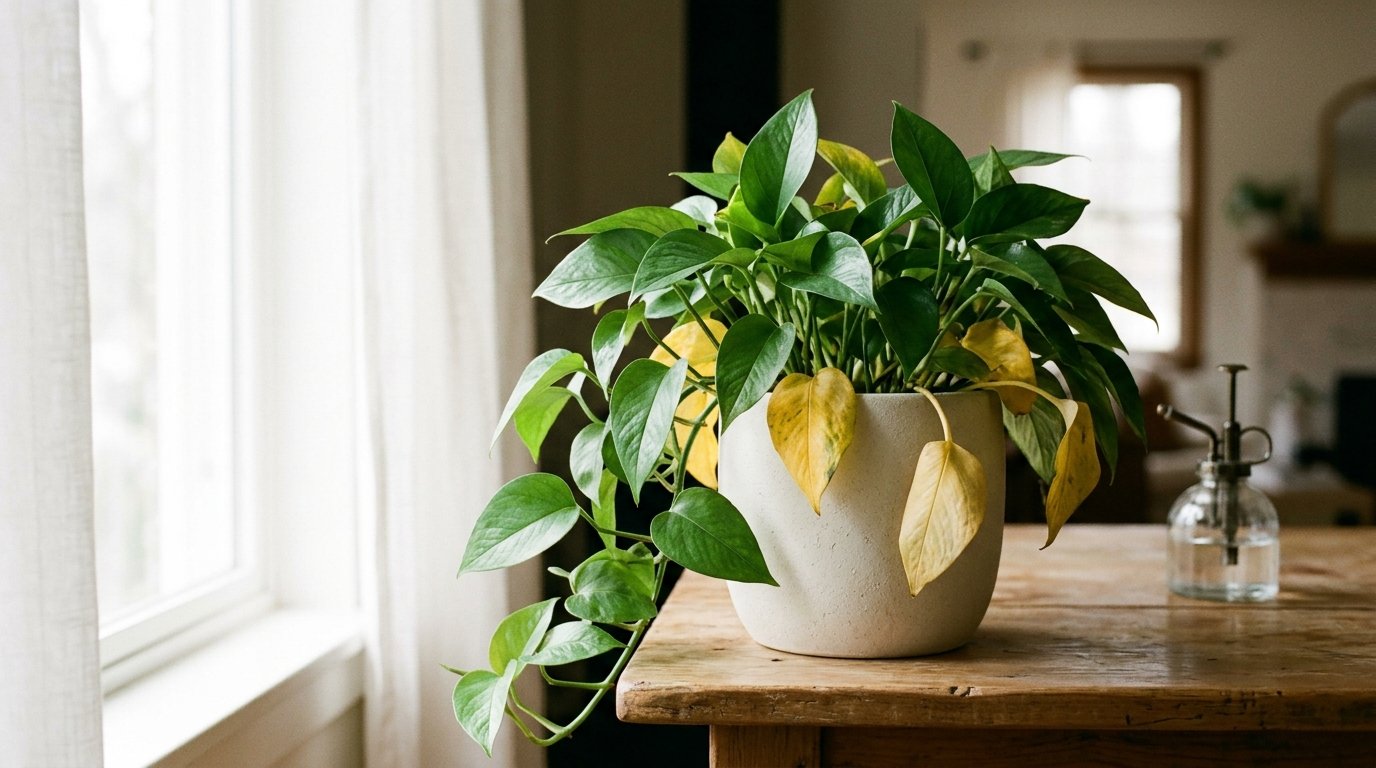
Yellow leaves on an indoor plant usually mean the plant is stressed, not dying. The most common cause is overwatering, followed by too little light and underwatering. Less often, the cause is a nutrient shortage, pests, or simply old age. The pattern tells you which one it is. Yellow lower leaves in wet soil point to overwatering, while yellow leaves in dry soil point to underwatering. Yellow new leaves, on the other hand, point to a nutrient problem. Check the soil first, then the light, then the leaves.
A yellow leaf is a symptom, not a single disease. The same yellow can come from water, light, food, roots, pests, or age. That is why the first step is always to diagnose, not to treat. Do not water, feed, move, and repot the plant all in one afternoon. Pick the most likely cause, make one change, and watch the new growth. New growth tells you whether the fix worked. Old yellow leaves almost never turn green again.
Why Are My Indoor Plant Leaves Turning Yellow?
The short answer is that yellow leaves are your plant asking for a change. Roots need both water and air. Wet soil suffocates the roots, and they rot, so the leaves turn yellow. Dry soil for too long makes the plant drop its older leaves to save water, and those leaves turn yellow first. Low light makes the plant shed leaves it can no longer feed. And when food runs short, the plant pulls nutrients from old leaves to feed new growth.
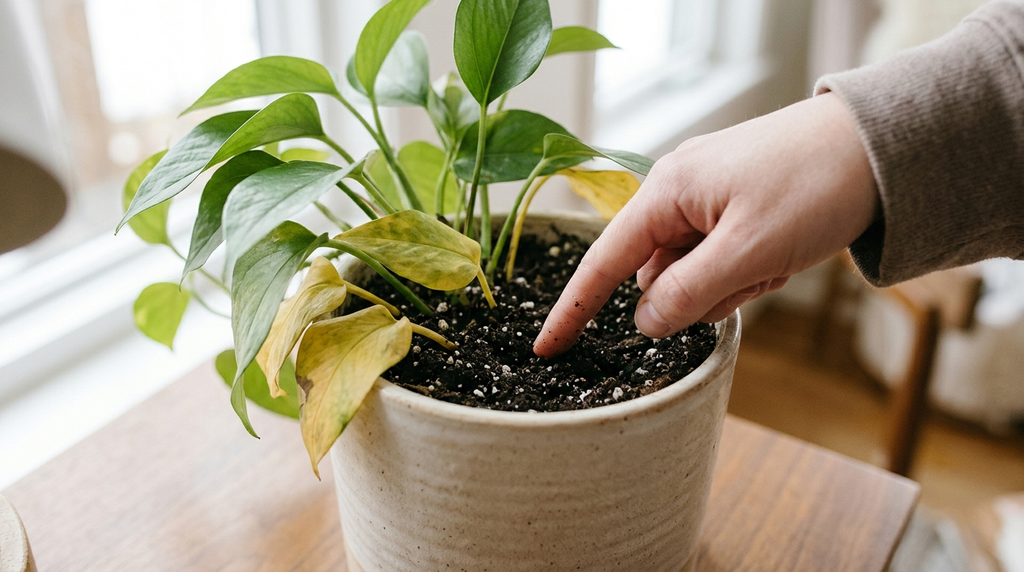
Start with the soil. Push your finger 2 inches into the pot. If the soil feels wet and the pot feels heavy, overwatering is the likely cause. If the soil feels dry all the way down and the pot feels light, underwatering is the likely cause. Then look at the pattern. Are the lower, older leaves yellow, or the new ones at the top? Are the veins still green while the leaf turns yellow between them? Each pattern points to a different cause.
Yellow leaves quick diagnosis card
- Lower leaves yellow, soil wet and heavy: overwatering or root rot. Stop watering, check the roots.
- Lower leaves yellow, soil dry and light: underwatering. Water deeply, then drain.
- Leaves yellow, plant leggy and stretched: too little light. Move it closer to a bright window.
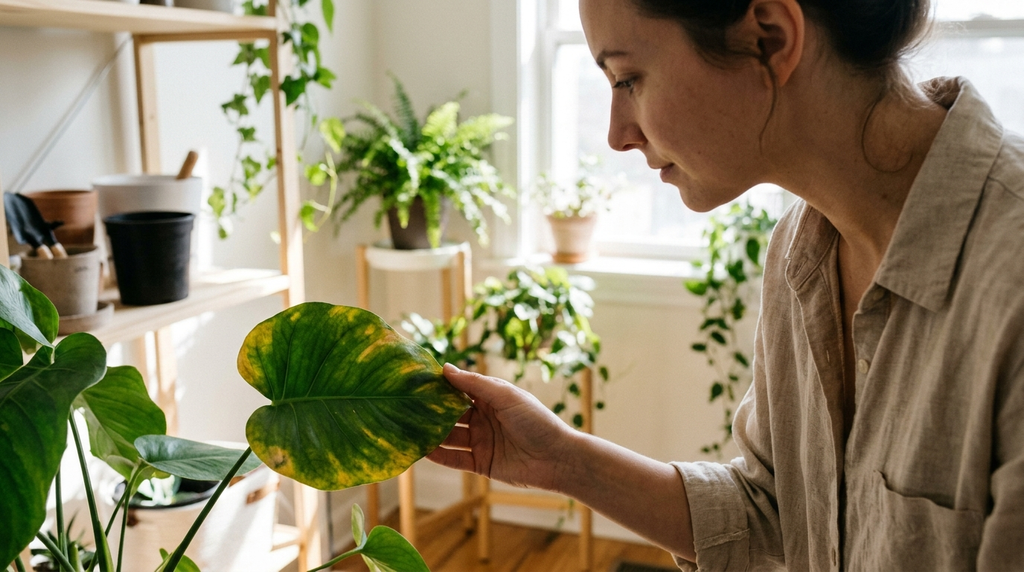
- Yellow between green veins on old leaves: magnesium shortage. Rule out watering first.
- Yellow between green veins on new leaves: iron shortage. Feed lightly in spring and summer.
- Yellow leaves with webbing or white cotton: pests. Isolate the plant and treat it.
- One or two old leaves yellow, the rest healthy: normal aging. Nothing to fix.
How to Diagnose Yellow Leaves in 3 Steps
Diagnosis takes five minutes. Do these three steps in order, before you water, feed, or repot anything.
First, check the soil. Push your finger 2 inches into the pot, and lift the pot to feel its weight. Wet soil and a heavy pot mean too much water. Dry soil and a light pot mean too little water. Soil that stays wet for more than a week after watering means poor drainage, even if you water rarely.
Second, check the light. Where does the plant sit? A plant more than 10 feet from a window gets very little light, even if the room looks bright to you. A plant in a north-facing window gets the least light of all. If the plant is leggy, with long stems and small pale leaves, light is part of the problem.
Third, look at the pattern. Which leaves are yellow, old or new? Is the whole leaf yellow, or only the tissue between the veins? Are there spots, webbing, or white cotton? Write down what you see. Then match it to the causes below. Fix the most likely cause first, and give the plant two weeks before you change anything else.
Cause 1: Overwatering and Root Rot
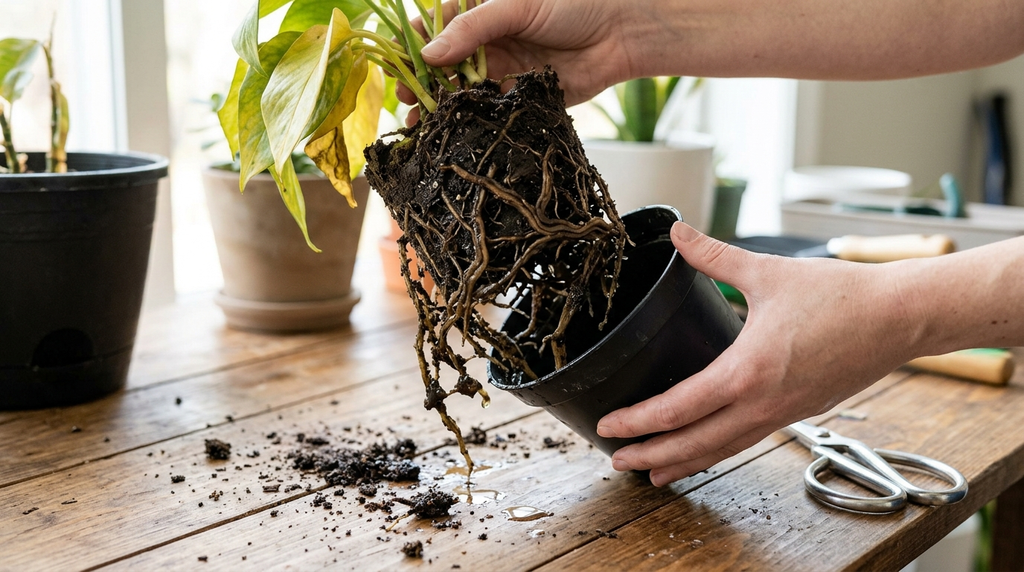
Overwatering is the number one cause of yellow leaves on indoor plants. It is also the most common reason indoor plants die. Roots need air as well as water. When the soil stays wet, the air pockets in the soil fill with water. The roots suffocate, and then they rot. Rotting roots cannot take up water or food, so the plant turns yellow even though it is sitting in moisture. That is the cruel part. An overwatered plant looks thirsty, so people water it more, and the rot gets worse. The Clemson Cooperative Extension guide to houseplant problems lists overwatering as the main cause of death of potted plants.
The signs are clear once you know them. Lower leaves turn yellow first, and they feel soft, not crispy. Damp soil that stays wet for days after watering is another sign. A heavy pot, a soft stem base, and a sour smell from the soil all point the same way. Tiny black flies around the pot are another clue, since they breed in wet soil. If you see several of these signs together, stop watering at once.
To fix it, let the soil dry out fully. Empty the saucer, so the pot does not sit in water. Move the plant to bright, indirect light, so it uses water faster. If the yellowing keeps spreading, take the plant out of the pot and look at the roots. Healthy roots are white or light tan and firm. Rotting roots are brown or black, soft, and mushy. Cut away the rotten parts with clean scissors, and repot in fresh, fast-draining mix, in a pot with drainage holes. Our How to Water Indoor Plants guide explains the finger test and how to water deeply without overwatering.
How to tell if yellow leaves are from overwatering or underwatering?
Lift the pot and feel the soil. A heavy pot with damp soil and soft yellow leaves points to overwatering. A light pot with dry soil and crispy yellow leaves points to underwatering. Drooping with wet soil means the roots are damaged and cannot drink. Drooping with dry soil means the plant is simply thirsty. When in doubt, check the roots. White and firm means the roots are fine. Brown and mushy means rot.
Cause 2: Underwatering
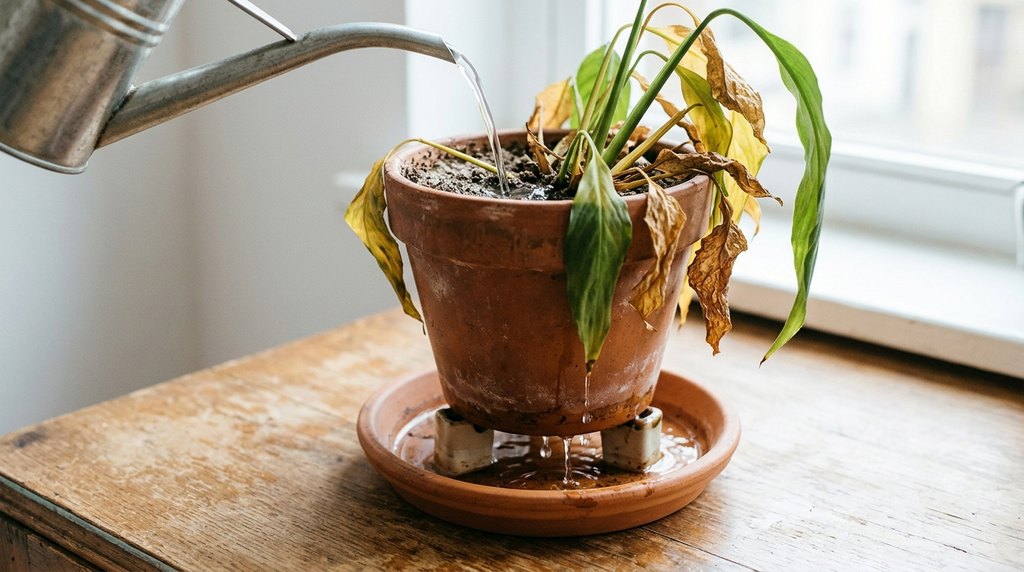
Underwatering turns leaves yellow too, but in a different way. When the roots stay dry for too long, the plant starts dropping its older leaves to save water. Those leaves turn yellow, then brown and crispy, and they fall off. Dry soil pulls away from the sides of the pot. Leaves feel dry and papery, not soft. The plant may droop, and the pot feels very light.
The fix is simple. Water the plant deeply, until water runs out of the drainage holes. Then empty the saucer. If the soil has gone so dry that water runs straight through without soaking in, set the whole pot in a basin of water for 20 to 30 minutes, so the root ball can rehydrate. Then let it drain fully. Do not water a little bit every day. A deep watering, then a dry period, is what the roots need.
After watering, the plant should perk up within a few hours. The yellow leaves will not turn green again, but the new growth should come in healthy. If the plant does not perk up, the roots may be damaged, or the soil may be compacted. In that case, repot in fresh mix.
Cause 3: Too Little Light
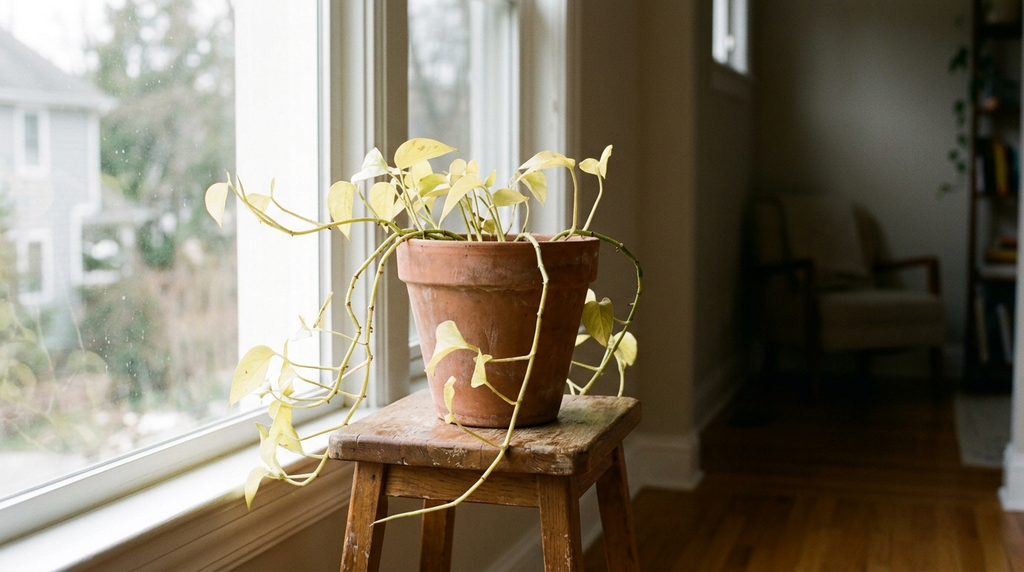
Light is the forgotten cause of yellow leaves. A plant in a dim corner uses water slowly, grows slowly, and sheds the leaves it can no longer feed. Those leaves turn yellow and drop, usually starting with the lower ones. The plant grows leggy, with long bare stems and small pale leaves. New leaves stay small. The whole plant looks tired, even when the watering is right.
The fix is to move the plant closer to light, but do it gradually. A sudden move from a dim corner to direct sun can scorch the leaves. Move it a few feet closer to a bright window, and give it a week to adjust. An east-facing window is a good home for most indoor plants. A spot a few feet back from a south or west window works well too. Our How Much Light Do Indoor Plants Need? guide explains low, medium, and high light in plain words, and how to test the light in your room.
Low light also makes overwatering worse, since a plant in dim light uses less water and the soil stays wet for longer. Fix the light first, and let the soil dry out.
Cause 4: Nutrient Deficiencies
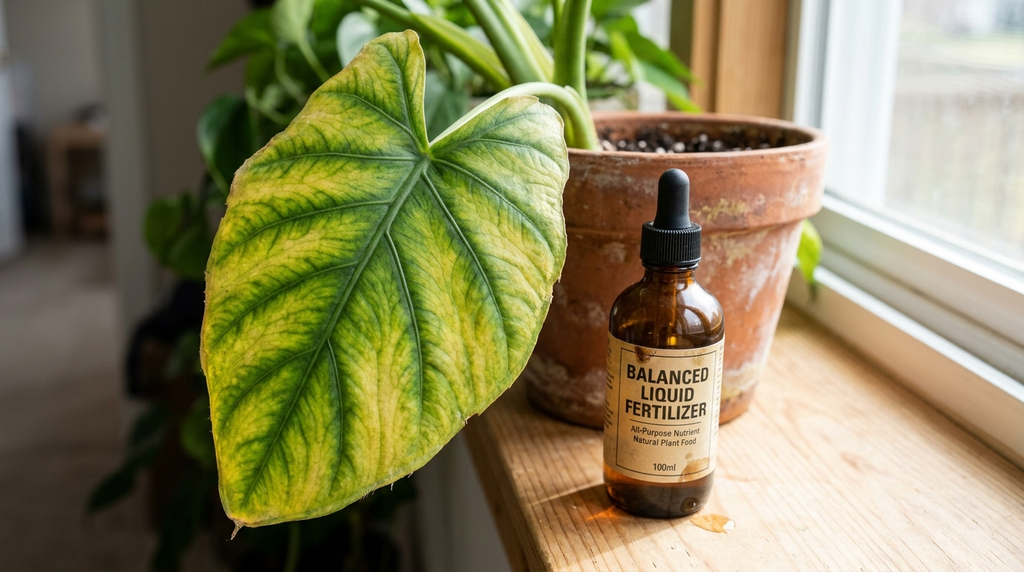
If the watering and light are right, and the leaves are still yellow, food may be the problem. Plants need nitrogen, iron, magnesium, and other nutrients to stay green. When one runs short, the leaves yellow in a pattern that tells you which one is missing. Do not guess. Check the pattern first, and fix the watering and light before you feed. Feeding a plant with rotting roots will not help it, and it can make the problem worse.
Nitrogen shortage: old leaves first
Nitrogen is a mobile nutrient, so the plant pulls it from old leaves to feed new growth. That is why a nitrogen shortage yellows the oldest, lower leaves first. The whole leaf turns pale yellow, and growth slows down. The fix is a balanced houseplant fertilizer at half strength, once a month in spring and summer. Do not feed in winter, when the plant is not growing.
Iron and magnesium shortage: yellow between green veins
Iron and magnesium shortages both cause yellowing between the veins, while the veins stay green. The difference is where it starts. Iron shortage shows on the newest leaves first, since iron does not move inside the plant. Magnesium shortage shows on the older leaves first, since the plant moves magnesium to new growth. For iron, a balanced feed in the growing season usually helps. For magnesium, Epsom salt can help, but only when magnesium is truly the problem. Our guide to Epsom salt, coming next in this series, will explain how to tell and how much to use. Never use table salt instead of Epsom salt. Table salt is sodium chloride, and it harms plants.
Cause 5: Pests and Disease
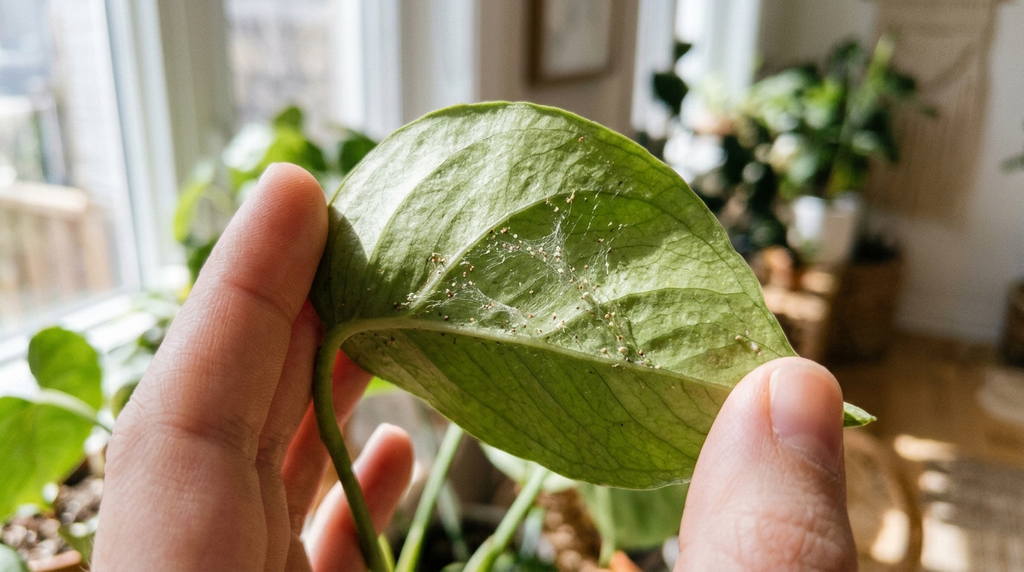
Pests can turn leaves yellow, but they leave other clues too. Spider mites make fine webbing under the leaves, and the leaves look speckled and dusty. Mealybugs leave white, cottony clusters in the leaf joints. Fungus gnats are tiny black flies around the soil, and their larvae damage the roots. Scale insects look like small brown bumps on the stems. If you see any of these, the yellow leaves are only part of the problem.
The first step is to isolate the plant, so the pests do not spread to your other plants. Then look closely at the undersides of the leaves, where pests hide. Wipe the leaves with a damp cloth, and remove the pests you can see. For most common pests, insecticidal soap or neem oil, used as the label says, will help. Repeat the treatment every 5 to 7 days for three to four rounds, since new pests hatch from eggs after the first treatment. Do not stop after one spray.
Disease is less common indoors. Brown spots with yellow edges can mean a fungal leaf spot. Remove the affected leaves, keep the leaves dry when you water, and improve the air flow. If the whole plant is rotting at the base, with a foul smell, it is likely root rot. Go back to Cause 1, and check the roots.
Cause 6: Normal Aging and Recent Changes
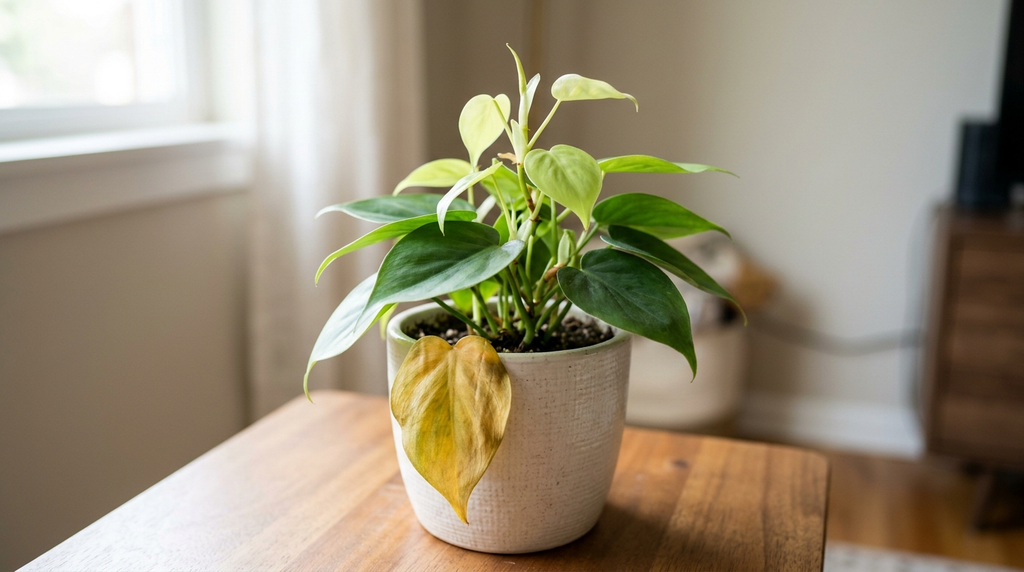
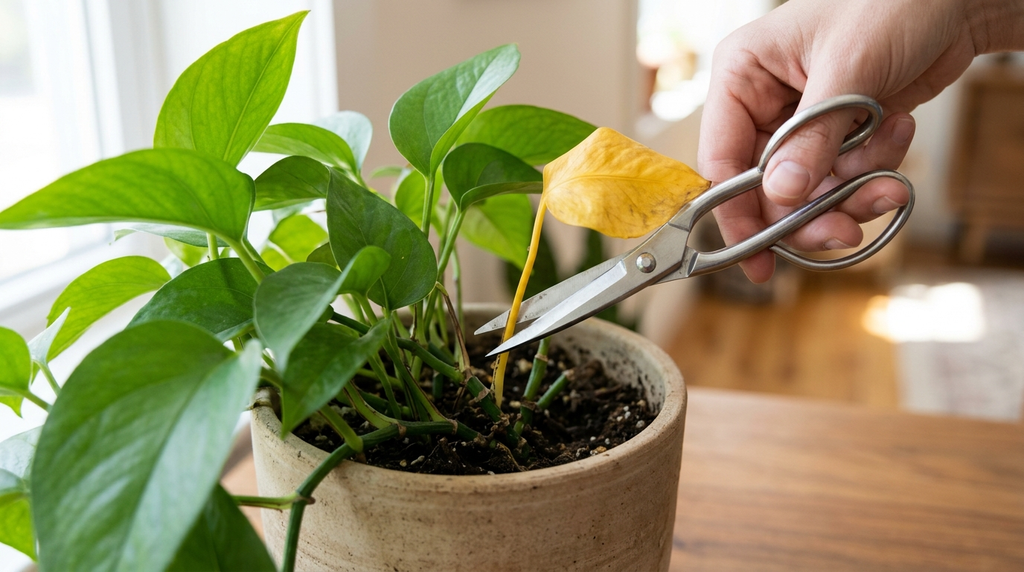
Not every yellow leaf is a problem. One or two of the oldest, lowest leaves turning yellow while the rest of the plant looks healthy is normal. Plants retire old leaves as they grow. The leaf turns yellow, dries up, and falls off. New growth comes in green and healthy. Leave the yellow leaf alone until it comes off easily, or cut it off cleanly at the base if it bothers you.
Recent changes can also turn leaves yellow. A plant that was just repotted, moved to a new room, or brought home from a shop may drop a few leaves while it adjusts. Cold drafts, a sudden drop in temperature, and hot air from a heater can all cause yellowing too. The plant is not dying. It is adjusting. Give it two weeks in a stable spot, with steady watering, and watch the new growth. If the new leaves come in green, the plant has settled. If the yellowing keeps spreading, go back to the diagnosis steps and check the soil and roots.
How to Fix Yellow Leaves Step by Step
When you see yellow leaves, do not panic, and do not try everything at once. Follow these steps in order, and change one thing at a time.
First, check the soil and the pot. Push your finger 2 inches into the soil. Lift the pot to feel its weight. If the soil is wet, stop watering and empty the saucer. If the soil is dry, water deeply and let it drain. Make sure the pot has drainage holes. A pot with no holes is one of the most common causes of yellow leaves.
Second, check the light. Move the plant to a brighter spot, a few feet from a window, and give it a week to adjust. Do not put it in direct sun all at once.
Third, look for pests. Check the undersides of the leaves for webbing, white cotton, or tiny insects. If you find pests, isolate the plant and treat it.
Fourth, wait. Give the plant two weeks, and watch the new growth. New green leaves mean the fix worked. More yellow leaves mean you picked the wrong cause, so go back to the diagnosis steps. For more detail on each plant, see our How to Take Care of a Snake Plant Indoors, How to Take Care of a Pothos Plant, How to Take Care of a ZZ Plant, and Monstera Deliciosa Care guides.
Frequently Asked Questions
First, find the cause. Check the soil with your finger. If it is wet, stop watering and let it dry out. If it is dry, water deeply. Then check the light, and move the plant closer to a bright window. Look for pests under the leaves. Fix the most likely cause, make one change at a time, and judge the fix by the new growth.
Almost never. Once a leaf has turned fully yellow, it has lost its chlorophyll, and it will not make more. The goal is to stop the yellowing from spreading. Cut the yellow leaf off if it bothers you, or leave it until it falls off on its own. Healthy new growth is the sign your fix worked.
Lift the pot and feel the soil. A heavy pot with damp soil and soft yellow leaves points to overwatering. A light pot with dry soil and crispy yellow leaves points to underwatering. Drooping with wet soil means the roots are damaged. Drooping with dry soil means the plant is thirsty. When in doubt, check the roots. White and firm is healthy. Brown and mushy is rot.
Only when the yellowing is caused by a magnesium deficiency. The sign is older leaves turning yellow between green veins, while the veins stay green. If the plant is yellow because of overwatering, low light, or a nitrogen shortage, Epsom salt will not help. It is not a complete fertilizer, and it will not fix a watering problem.
Yes, you can. A fully yellow leaf will not turn green again, and it is not helping the plant. Cut it off cleanly at the base with clean scissors. If only the tip is yellow, you can trim the tip, but leave a thin line of yellow so you do not cut into green tissue. Do not pull leaves off roughly, since that can tear the stem.
Lower leaves turn yellow first for three common reasons. The plant may be overwatered, and the roots are rotting. The plant may be short of nitrogen, and it is pulling food from old leaves to feed new growth. Or the leaves may simply be old, and the plant is retiring them. Check the soil first. Wet soil points to overwatering. One or two old leaves, with the rest healthy, is normal aging.
Conclusion
Yellow leaves are a message, not a death sentence. Most of the time, the cause is simple: too much water, too little water, or too little light. Check the soil first. Then check the light. Then look at the pattern. Fix one thing, and give the plant two weeks. Judge the fix by the new growth, not by the old yellow leaves.
Your next step is simple. Pick the plant with yellow leaves, and push your finger 2 inches into its soil today. If the soil is wet, stop watering. If it is dry, water it deeply. That one check tells you more than any fertilizer or spray will. Do it before you buy anything for the plant.
Next, explore How to Water Indoor Plants, How Much Light Do Indoor Plants Need?, How to Take Care of a Pothos Plant, and How to Take Care of a ZZ Plant.
