How to Water Indoor Plants: A Simple Beginner Guide
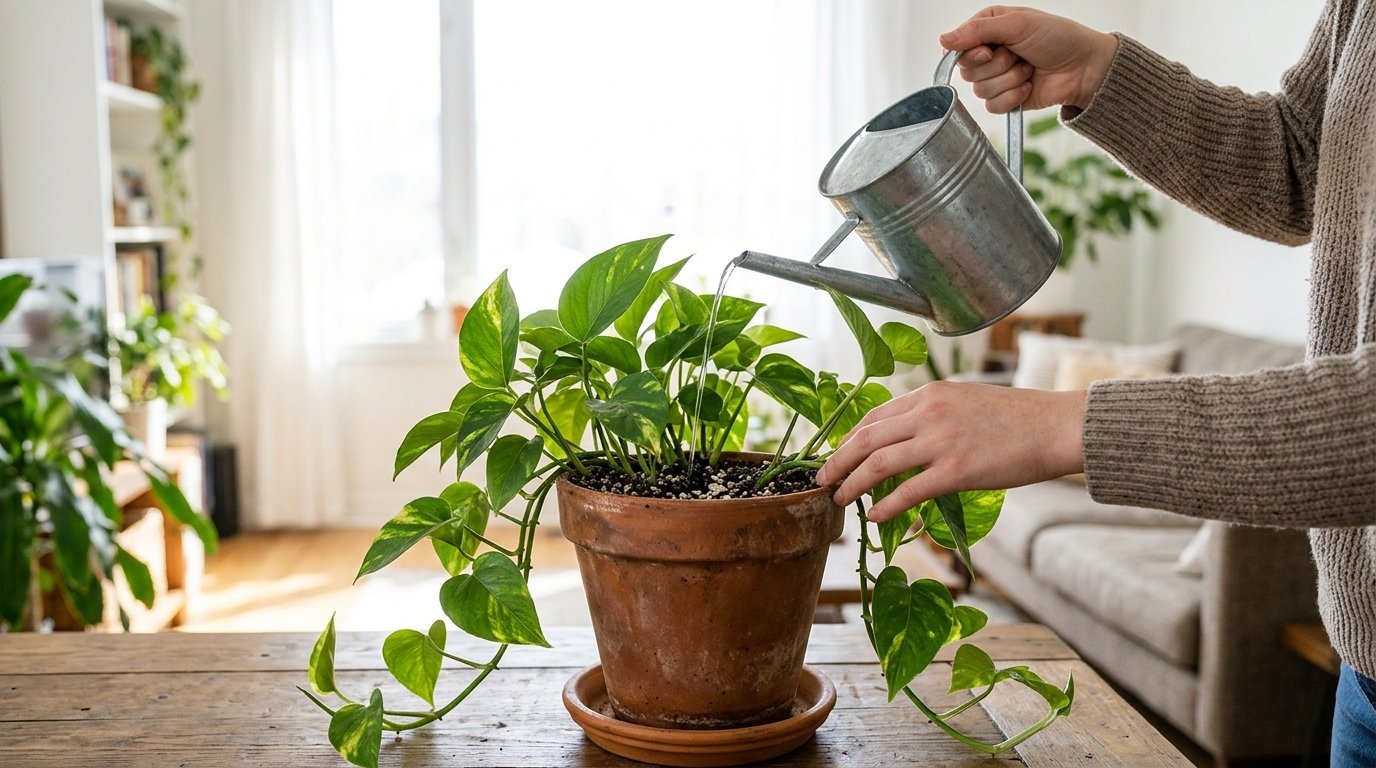
Learning how to water indoor plants is the single most useful skill for a new plant owner. Most indoor plants do not die because their owner forgot them for a week. They die because they were watered too often. Or they were given a little water every day, so the roots never had a chance to breathe. The fix is simple. Check the soil first. Water deeply when the soil is dry. Let the extra water drain away. Then wait.
This guide shows you how to do that step by step. You will learn how much water to give and how often to water. You will also learn which method is easiest, and what water to use.
How to Water Indoor Plants the Right Way
Water by soil, not by calendar. A plant in a bright, warm room dries out much faster than the same plant in a cool, dim room. A small pot dries out faster than a large pot. So a rule like water every Monday will be wrong for half your plants, half the time.
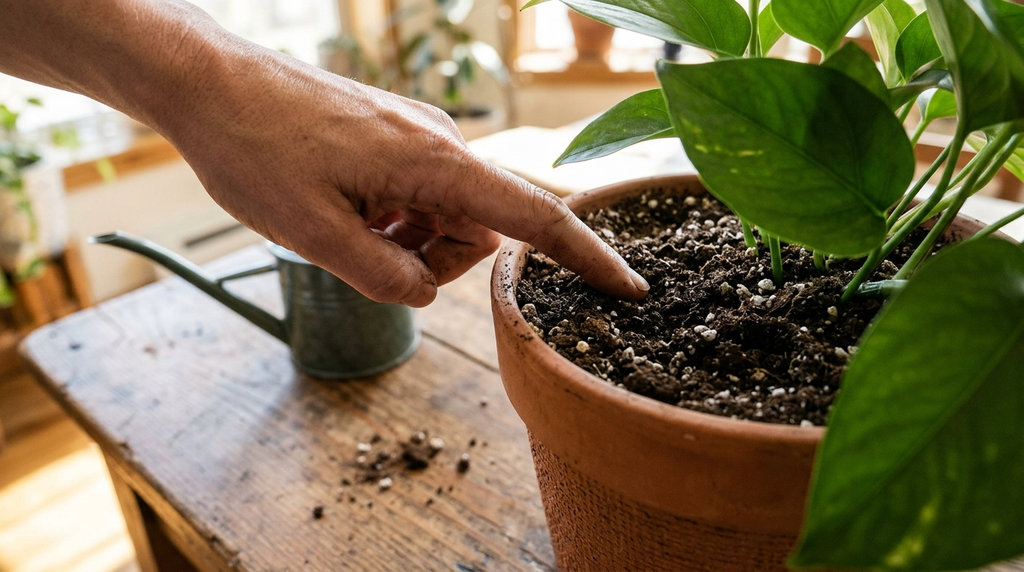
Start with the finger test. Push one finger about one to two inches into the soil. If the soil feels dry at that depth, it is time to water. If it still feels damp or cool, wait one or two days. Then check again. This one habit prevents most watering mistakes. It takes only a few seconds.
When the soil is dry, water slowly and evenly over the whole soil surface. Pour a little. Wait for it to soak in. Then pour a little more. Keep going until water runs freely out of the drainage holes. That tells you the water has reached the roots, not just the top layer of soil.
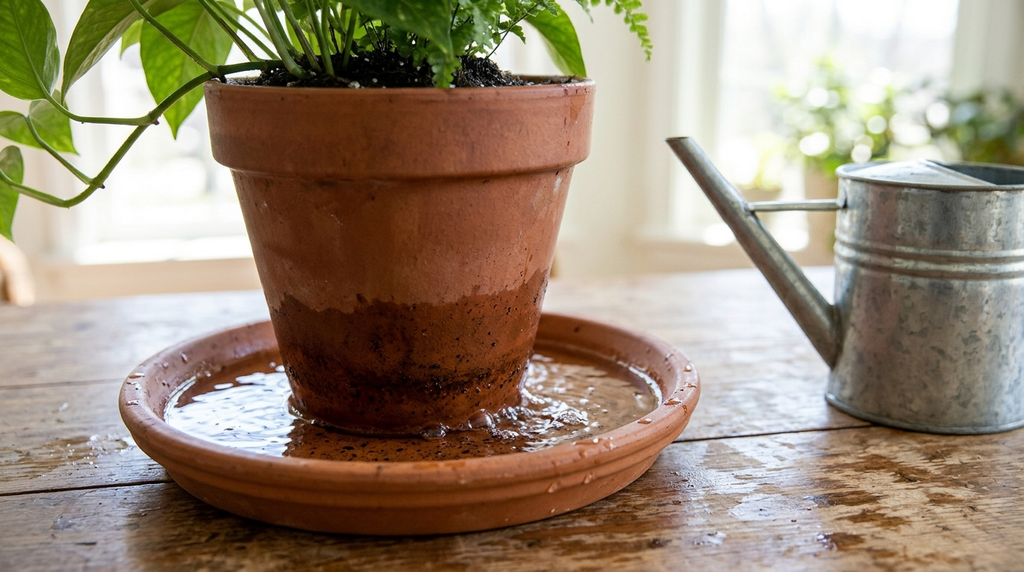
Then let the pot drain fully. Tip out any water in the saucer or outer pot within about thirty minutes. A plant left sitting in water will have wet roots with no air. That is how root rot starts. A pot with no drainage hole makes this much harder. So keep your plant in a nursery pot with holes, inside any pretty outer pot. Always tip the extra water away.
A simple routine you can follow every time
Check the soil, water deeply, drain, and wait. That is the whole routine. Do not give small sips every day to keep the top of the soil damp. Small sips wet only the top layer. The roots stay dry below while the surface looks wet. Deep watering, done less often, helps roots grow down. It makes the plant stronger over time.
If the soil has dried out so much that it has pulled away from the sides of the pot, water may run straight down the sides. It will not wet the soil. In that case, water once. Wait about thirty minutes. Then water again slowly.
How Much Water Does an Indoor Plant Need?
There is no single amount that is right for every indoor plant. How much water a plant needs depends on the pot, the plant, the soil, the light, and the season. A large monstera in a big pot needs far more water than a small succulent in a tiny pot. That is why measuring cups and fixed amounts often cause more harm than good.
The best guide is the drain test. Water slowly until water runs out of the drainage holes. Then stop. That amount is right for that pot, that plant, and that day. It also washes out extra salts from tap water and plant food. That is good for the roots.
If your pot has no drainage hole, be much more careful. You cannot see when the soil is full. Water a little at a time. Wait. Check the soil with your finger. In general, it is safer to give a little less than to give too much.
Why the top of the soil can mislead you
The top inch of soil dries first. Air and light reach it. The soil lower down, where most of the roots live, can still be damp. That is why you should check one to two inches down. Do not just look at the surface.
How Often Should I Water Indoor Plants?
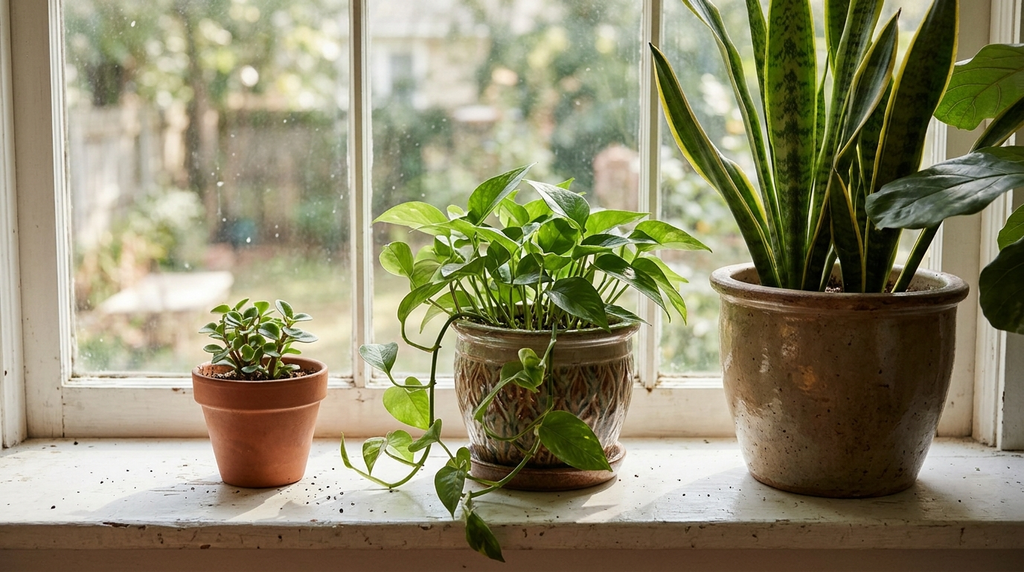
Most tropical indoor plants, like pothos, monstera, and philodendron, need water about once a week in warm, bright months. They need less in winter, when growth slows down. Succulents and cacti need water far less often. Often only every two to four weeks, and only when the soil is fully dry. These are starting points, not rules. Always check the soil first. Light, heat, humidity, pot size, and soil type all change how fast a plant uses water.
A plant in a bright window in summer may need water twice as often as the same plant in a dim corner in winter. Clay pots dry faster than plastic pots. Water can pass through the clay walls. Loose, fast-draining soil dries faster than dense soil that holds water. So the honest answer to how often is that it depends. The finger test is how you find out for your own home.
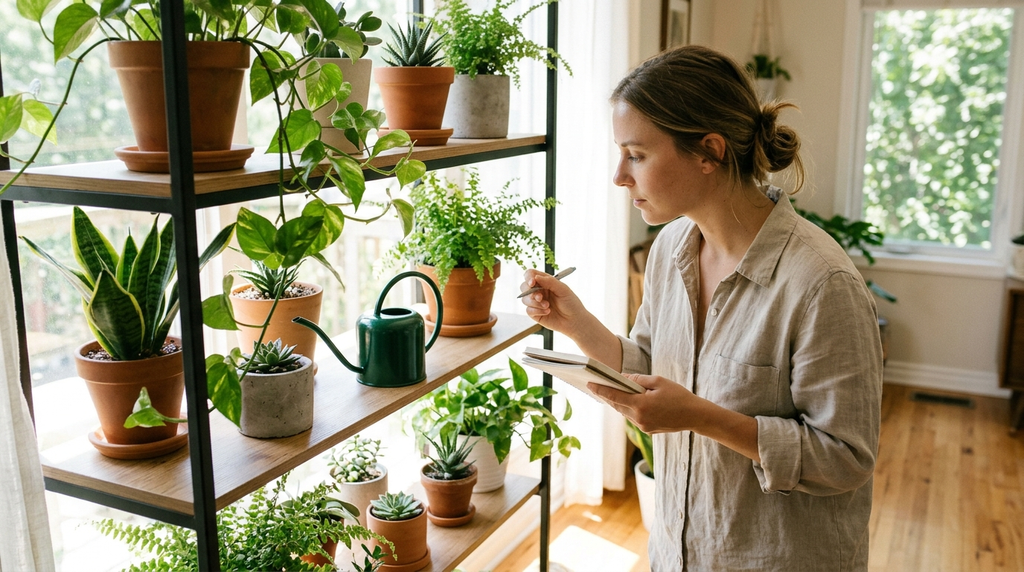
Look for a pattern instead of a date. Check your plants every few days at first. Note how long each one takes to dry out. After two or three weeks, you will know which plants dry fast. You will know which ones stay damp. That pattern is your watering schedule.
How long can indoor plants go without water?
Most healthy indoor plants can go without water for one to two weeks. That is true if the soil was wet when you left, and the room is not very hot or bright. Succulents, snake plants, and ZZ plants can often go for three to four weeks. They store water in their leaves or roots. Ferns and peace lilies cope less well. They may droop after only a few days without water.
If you go away for a week, water your plants well the day before you leave. Move them a little further from bright windows. Group them together, so the air around them stays a little more humid. For a longer trip, ask someone to check the soil once. Do not ask them to water on a fixed day.
Should I Water Indoor Plants Daily?
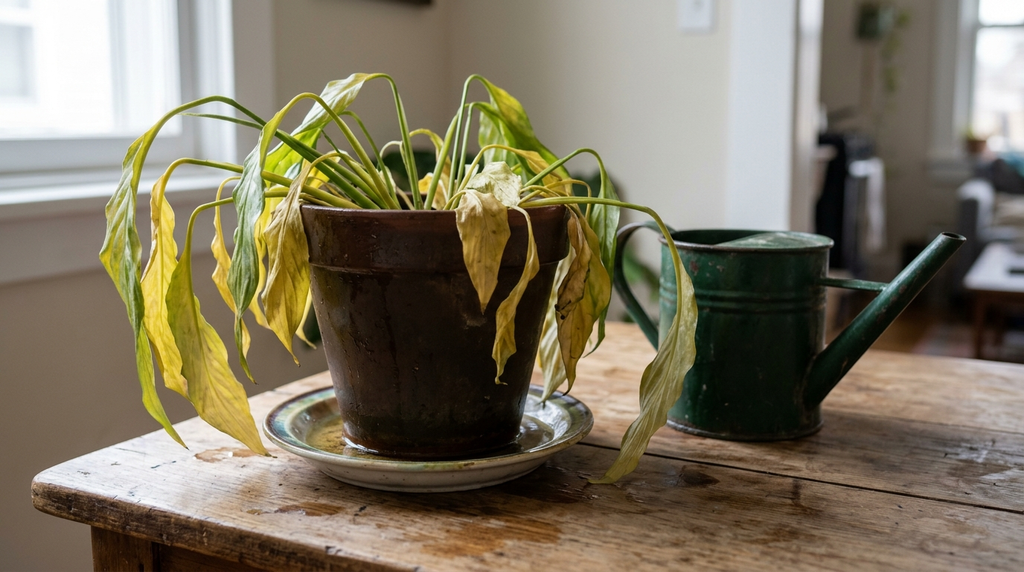
No, you should not water most indoor plants daily. Daily watering is one of the most common beginner mistakes. It is a fast way to kill a plant. Roots need both water and air. When the soil stays wet all the time, air cannot reach the roots. The roots start to rot. The plant may look thirsty, with yellow leaves and soft stems. But the real problem is too much water, not too little.
There are a few exceptions. A plant in a very small pot in a hot, bright spot may dry out in a day or two in summer. A fern in a warm bathroom may need water more often than a succulent on a cool shelf. But even then, water daily only if the soil is actually dry when you check it. If the soil is still damp, wait.
A better habit is to check daily but water only when needed. Walk past your plants. Look at the leaves. Check the soil of any plant that looks dry. Most days, the answer will be to wait. That waiting is not neglect. It is what keeps the roots healthy.
Top Watering vs Bottom Watering
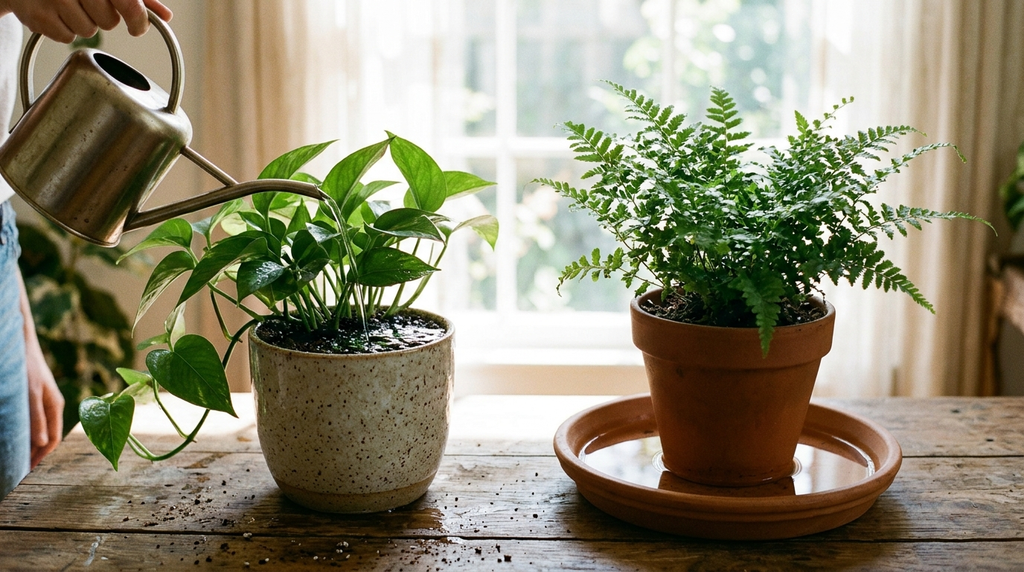
Top watering means pouring water onto the soil surface, from above. Bottom watering means setting the pot in a shallow tray of water. The soil soaks it up from below, through the drainage holes. Both methods work. Both have a place in a beginner routine.
Top watering is the easiest method for most plants. It is fast. It washes salts out of the soil. You can see at once when water starts to drain from the bottom. Pour slowly and evenly over the whole surface, not just in one spot. That way the water reaches all the roots. Avoid pouring water onto the leaves of plants that hate wet leaves, like African violets. Also avoid pouring water into the centre of plants that form a rosette. Water sitting there can cause rot.
Bottom watering is useful in three cases. First, when the soil has become very dry and repels water. Top watering then runs straight through. Second, for plants that hate wet leaves. Third, for very small seedlings, or plants in fine soil that washes away easily.
Which method should a beginner choose?
Start with top watering for most plants. Use bottom watering once a month, or when the soil is very dry. That gives you the benefits of both methods. Top watering flushes salts out. Bottom watering makes sure the lower half of the root ball gets wet. Whichever method you use, always empty the saucer after. Never leave the plant sitting in water.
What Water Should I Use for Indoor Plants?
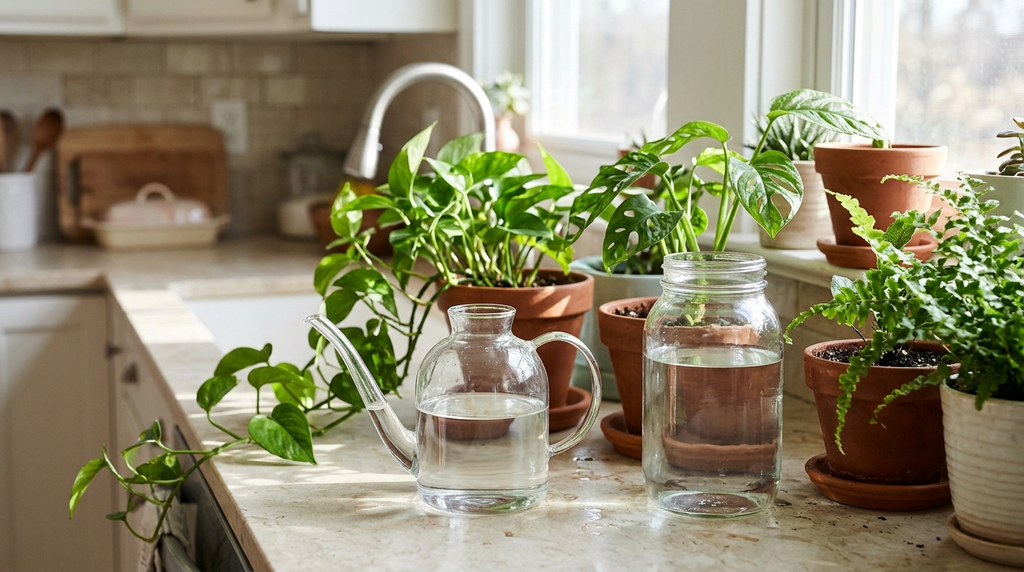
Room temperature water is best for most indoor plants. Cold water straight from the tap can shock the roots of tropical plants. This is true above all on a winter morning. Fill your watering can and leave it out for a few hours, or overnight. It will warm up to room temperature before you use it.
Tap water is fine for most common houseplants. If you are worried about chlorine, leave the water out in an open container for about a day. Much of the chlorine will escape. Rainwater is a good choice too, and many plants prefer it. Only use clean rainwater, collected in a clean container.
Do not use softened water for indoor plants. Water softeners add sodium. Sodium can damage roots and build up in the soil. If your home has a water softener, use rainwater, distilled water, or water from an unsoftened tap. Also avoid water that has had soap, cleaning products, or cooking salt added to it.
The basics are the same in the extension guides. The University of Arizona Extension guide on indoor plant care and the Mississippi State Extension guide on indoor plant care both stress the same points. Water when the soil needs it. Water deeply. Make sure the pot can drain.
Signs You Are Watering Too Much or Too Little
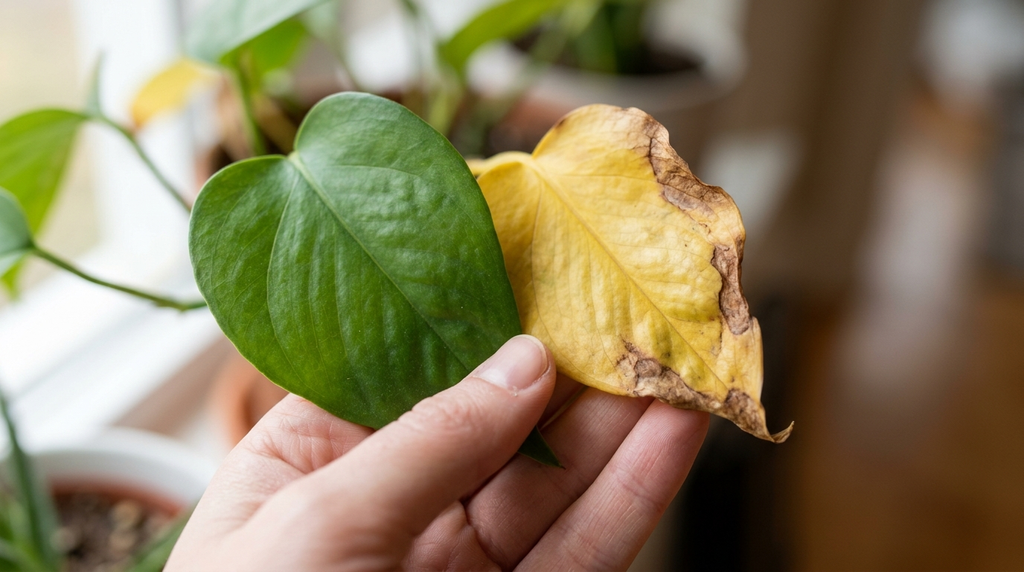
Your plant will tell you when the watering is wrong, if you know what to look for. The signs of too much water and too little water can look similar at first. So always check the soil before you act. That one check will tell you which problem you have.
Signs of overwatering include yellow leaves, above all lower leaves. Also soft or mushy stems, leaves that drop easily, and soil that stays wet for days after watering. You may also notice a bad smell from the soil, or small flies around the pot. Overwatering is the most common cause of houseplant problems. It often happens because the owner was trying to be kind, and watered too often.
Signs of underwatering include dry, crispy leaf edges, brown tips, leaves that droop and feel papery, and soil that has pulled away from the sides of the pot. The plant may look dull and stop growing. Underwatering is usually easier to fix than overwatering.
What to do first when you spot a problem
Check the soil with your finger. If it is wet and the plant looks unhappy, the problem is likely too much water. Stop watering. Tip out any standing water. Let the soil dry out. If it is dry and the plant looks unhappy, water deeply and let it drain. Then watch the plant for a few days. New growth is the best sign that you got it right. It may take a week or two to appear.
Watering Different Types of Indoor Plants
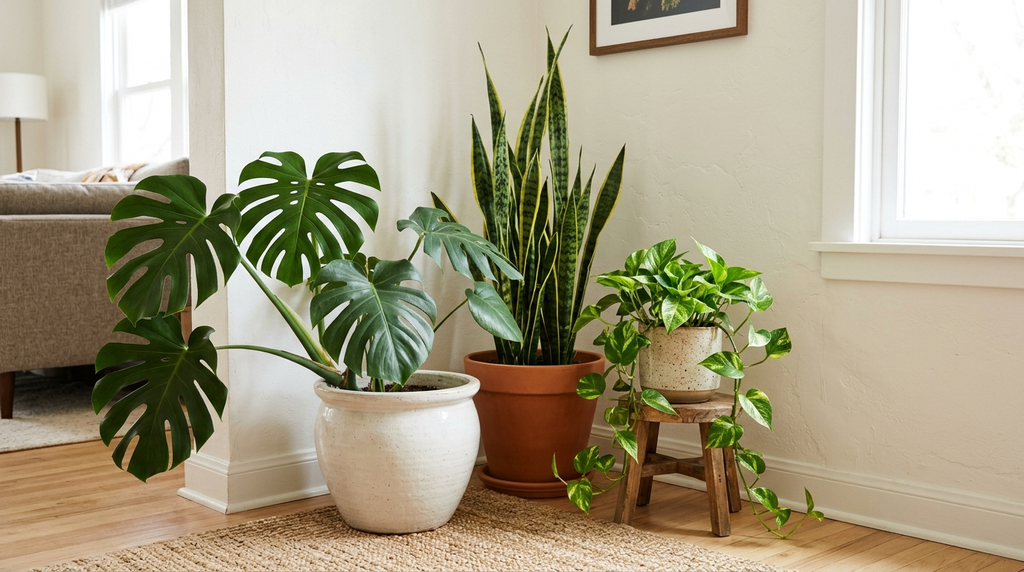
Different types of indoor plants need different amounts of water, even in the same room. The key is to learn what each type likes. Group plants with similar needs together if you can. That makes checking the soil much easier. Plants in the same group will dry out at about the same rate.
Tropical foliage plants like monstera, pothos, and philodendron like their soil to dry out a little between waterings. But they do not like to stay dry for long. Water them when the top one to two inches of soil feels dry. Our Monstera Deliciosa Care guide covers light and soil for monstera in more detail. The same watering habit applies to most tropical foliage plants.
Snake plants and ZZ plants store water in their leaves and roots. So they need far less water than tropical foliage plants. Water them only when the soil is fully dry, all the way down. Be extra careful in winter, when they use almost no water. Our How to Take Care of a Snake Plant Indoors guide explains this in detail. Overwatering is the main reason snake plants fail.
Succulents and cacti need the least water of all. Water them deeply. Then wait until the soil is fully dry before you water again. In winter, many succulents need water only once a month or even less.
Frequently Asked Questions
How much water does an indoor plant need?
It depends on the pot, the plant, and the room. But the drain test is the best guide. Water slowly until water runs out of the drainage holes. Then stop and let the pot drain. That amount is right for that plant on that day. Do not use the same fixed amount for every plant.
How long can indoor plants go without water?
Most healthy indoor plants can go without water for one to two weeks, if the soil was wet when you left. Succulents, snake plants, and ZZ plants can often go for three to four weeks. Ferns and peace lilies cope less well.
Should I water indoor plants daily?
No, most indoor plants should not be watered daily. Daily watering keeps the soil wet all the time. Air cannot reach the roots, and root rot can start. Check the soil daily if you like. But water only when the top one to two inches feels dry.
What is the easiest way to water indoor plants?
The easiest way is top watering with the finger test. Check the soil with your finger. Water slowly over the whole surface until it drains from the bottom. Tip out the extra water, and wait. Bottom watering is also easy for very dry soil, or for plants that hate wet leaves.
What is the number one killer of houseplants?
Overwatering is the number one killer of houseplants. It is more common than underwatering. Many owners water on a fixed schedule, or water a little every day. The roots sit in wet soil with no air, and they rot. Checking the soil before every watering is the best way to prevent it.
How do I bring my indoor plants back to life?
Start by checking the soil. If it is dry, water deeply and let it drain. Then move the plant to bright, indirect light. If it is wet, stop watering. Tip out standing water, and let the soil dry out. Trim away dead, mushy, or fully yellow leaves.
Conclusion
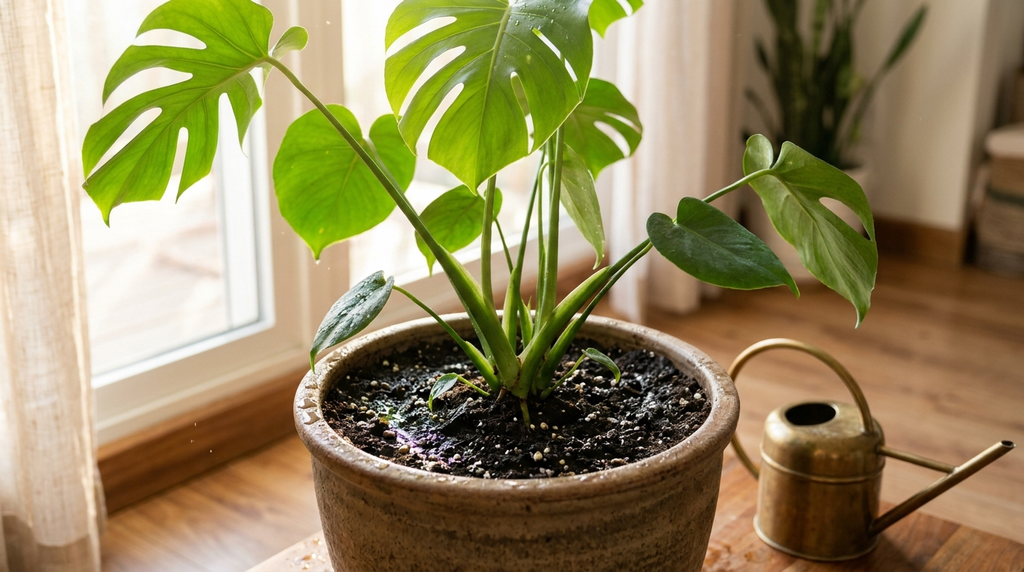
Watering indoor plants is not about a perfect schedule. It is about a simple habit. Check the soil. Water deeply when it is dry. Let the extra water drain away. Then wait. Once you learn that habit, most watering problems disappear. Your plants will grow stronger, with healthier roots and greener leaves.
Your next step is simple. Pick one plant today. Check the soil with your finger. Water it only if the top one to two inches feels dry. Then check the same plant again in three days. See how the soil has changed. That one check will teach you more about your plant than any fixed schedule ever will.
Next, explore How to Take Care of a Snake Plant Indoors, Monstera Deliciosa Care, 15 Best Tall Indoor Plants for Every Room, and Indoor Plants Hub.


One Comment